Monday, 8 February 2016

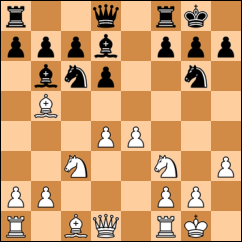
Game 19 - club match. Weald of Kent vs Swale

Weald of Kent vs Swale - Board One
Monday 8 February 2016
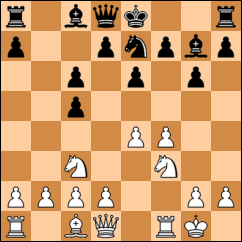
White: K. Nevols (132) - Black: D. Warrick (123)

Now I was wearing my proud first grade for January 2016 - 132 - which was more or less what I had expected. This was based on nine games from 2015, and my terrible start had been saved by two wins over grades 149 and 143 (Games 10 and 12).

For this game we were in Cranbrook Library, a few miles south of Maidstone and quite a pleasant location. One of those lovely small libraries that they are always trying to close down.

1. e4 e5
2. Nf3 Nc6
3. Bb5

Once more into the Ruy Lopez.

3. .... d6

This is known as the Steinitz Defence - named after the great 19th century world champion. 4. d4 exd4 5. Nxd4 Bd7 6. Bxc6 seems to be good for White. But, after another poor run of results, I again wanted to play simply.

4. O-O Nf6
5. Re1 Bd7
6. c3 a6
7. Ba4 b5
8. Bb3 h6

Perhaps a pre-emptive defence against Bg5 but I was more concerned about Black playing Bg4 so I put a stop to that.

9. h3 Be7
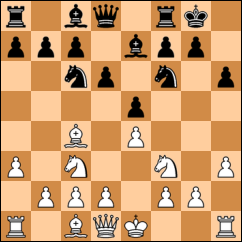
10. d3?!

My plan was to secure the centre and them play a slow build up. I did not yet know where Black planned to put his king but this move gave me the option of Nd2-f1 if I need it. But d3 is far too slow. 10. d4 at once was better.
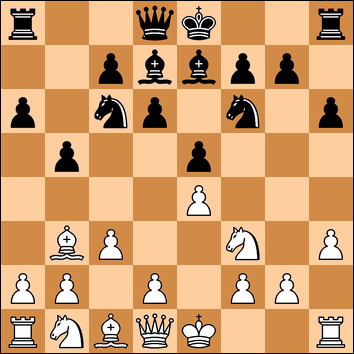


10 ...  Qc8

And Black shows his hand. He wants to attack my kingside while I am still under-developed.

11. Kh2 Nh7

Planning a surge forward with g5 and maybe f5, so I had better get on with it. The computer here recommends 11. ... O-O and 12. ... Na5 to punish White's timewasting of d3 and Kh2.

12. d4 g5

I now noticed the weakness at f7 and along the d5-a8 diagonal and thought I had a sequence to get an advantage.

13. dxe5 Nxe5
14. Nxe5 dxe5
15. Qd5?!

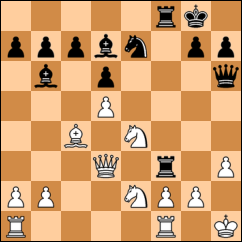
15. Qh5 is far better grabbing a quick pawn either on h6 or f7 - my move is based on an oversight. By attacking e5 and f7 the only way to defend both (I thought) was by f6 when Qf7+ dislodges his king. Then I saw I could not take on e5 anyway because Black has the pin with Bd6. So Black could now play 15. ... Be6 where I had 16. Qc6+ which would force 16. ... Kf8 then 17. Bxe6 fxe6 and I could think about 18. Re3 or 18. Be3.

15. ....  O-O

A complete surprise as I had forgotten this move was still legal. Back to the drawing board.

16. Nd2

With the intention of adding to the defence of the king.

16. ... Nf6
17. Qd3 Bd6

I was not too worried about 17. .. g4 18. hxg4 Nxg4+ 19. Kg1 Bh4 20. g3 but now I see that Black could try 20. ... Kh8!? with the plan 21. gxh4 Rg8 22. Kf1 Nh2+ 23. Ke2 Bg4+ with one line being 24. f3 Bxf3+ 25. Nxf3 Rg2+ 26. Kd1 Qg4 and White is very uncomfortable. Or 24. Ke3 Bh5 25. Nf1 Ng4+ 26. Kd2 Rd8 or Nxf2.

After 20. .. Kh8!? if White takes the pawn there is 21. Bxf7 Rg7 22. Bd5 Qf8. Or instead of 20. g3 White could instead stick with 20. Re2. But 17. .. g4 could still give a nasty attack.

The computer instead recommends 17. .. c5 18. Qg3 Qc7 as the way forward.

18. Nf1 c5
19. Qf3 Kg7
20. Ng3 g4
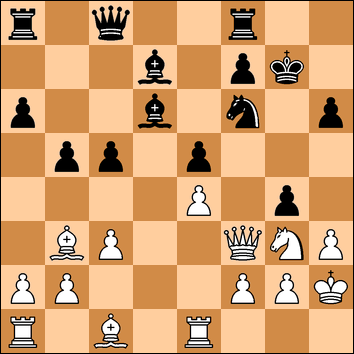


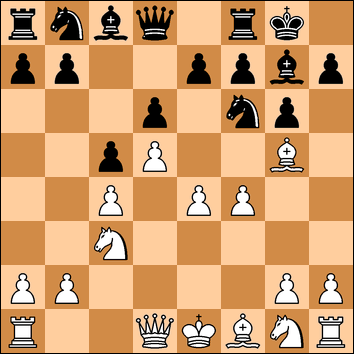
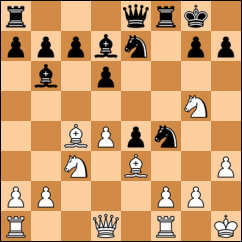
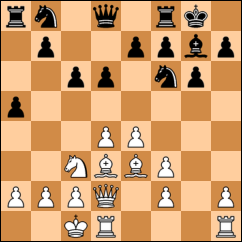
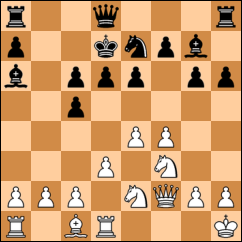
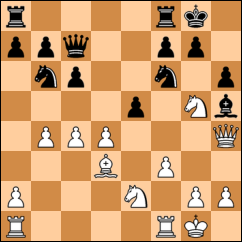
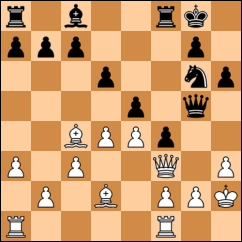
Instead g4 is played too late (again 20 ... c4 would have been better). White has some defences in order. Now here my first thought was simply 21. hxg4 and then either 21. ... Bxg4 22. Qe3 or 21. Nxg4+ 22. Kg1 when I saw a tactic. The first move was OK and won a pawn but then I saw the second move and leant forward with interest.

The tactic seemed to turn the tide by forcing the win of material - but could it work? What have I overlooked? I went off to the kitchen to grab a biscuit while pondering it in my mind. Could it work? I came back, sat down, gave one more run through the possibilities and played the moves.

21. Bxh6+! Kg6
22. Qe3!

The point! Not only does White threaten the rook but he also threatens an immediate mate in two.

22. ...  Nh7

The only move.

23. Bxf8 Bxf8
24. hxg4 Bxg4
25. f3 Bd7

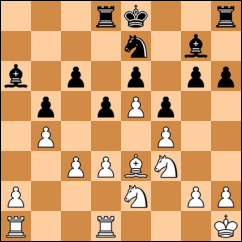
Satisfied! I am now the exchange and a pawn up. I surveyed the board to see where Black might have counterplay and saw the possibility of c4 and Bc5 so I decided to move that bishop before it gets cut off.

26. Bd5 Rb8

OK, so he could think about c4 and Bc5. I decide to improve the position of my knight.

27. Nf5 Bxf5?

I was pleased to see this. Black's could get counterplay chances with both the bishops working together.

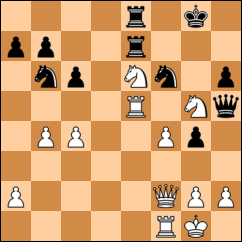
28. exf5+ Qxf5???

But I was even more pleased to see this. The game comes to an immediate halt.

29. Be4 Resigns

Wednesday, 3 February 2016

Game 18 - club match. Maidstone vs Swale

Maidstone vs Swale - Board Three
Friday 3 February 2016
White: B. Beavis (151) - Black: K. Nevols

Back to Maidstone and tucked away once again in a small room. The venue was a sports centre and the smell of the swimming pool bought back some horrible memories of school.

Again I found myself facing a highly graded formidable opponent.

1. d4 Nf6
2. c4

I gave a few moments thought to 2. ... c5. I had refreshed on the Benko Gambit and was keen to give it a go but decided in a team game it would not be on to sacrifice a pawn as Black against a 151 opponent - I ought to aim for at least a draw. I now regret this as it could not have been worse than what did happen - and I ended up sac-ing a pawn anyway.

2. .... g6

So instead it is a Kings Indian - but I have now decided to give this opening up as I am never happy with what I get.

3. Nc3 Bg7
4. e4 d6
5. Bg5 O-O

Maybe 5. ... e5 is better.

6. f4 c5
7. d5

Now you can see the reason for my disenchantment with this opening. Just seven moves in and I am already very restricted in space.

(The computer disagrees and comes up with the imaginative 7. ... Ng4! 8. Qd2 Bd4 hitting the weakened e3 and f2 squares. Indeed 9. Nf3 f6 10. Bh4 Be3 wins a pawn. I did not see this at all!)


7. ... Qa5

To threaten Nxe4

8. Qd2 Nbd7
9. Nf3 h6
10. Bh4 Re8
11. Bd3 a6

White is set up very nicely and can take his time castling and advancing in the centre. I decide the only way I can get counterplay is with a b5 advance and sacrifice.

12. a4 b5!?


This is best played before White castles and while the queen's rook is undefended.

13. cxb5 Nb6
14. bxa6 Bxa6

This was the plan. In return for the pawn I get some space and some play. I am now thinking of c4 and then Nfd7-c5-d3. A better plan may have been Reb8-b4.

15. O-O c4?

Fatally giving away control of the d4 square. Although I saw the possiblity of Nd4, I did not think there was a lot that White could do with it. A better line might have been 15. ... Bxd3 16. Qxd3 Nh5. Then 17. g3 cuts out the bishop while 17. Nd2 and Black might get some play with 17. ... Bd4+.

16. Be2 Nfd7
17. Nd4

Now the knight has arrived, I realised that c4 had been a mistake. The immediate threat is Nc6 Qc5; Bf2. So I had to give up the bishop. Best now might be 17. ... Bb7.

17. ... Bxd4
18. Qxd4 Nc5

My knights were beginning to get active and I had high hopes of getting the pawn back.

19. Rb1 Nb3
20. Qe3 Nxa4
21. Nxa4 Qxa4

The queenside seems to be holding together ... but ...


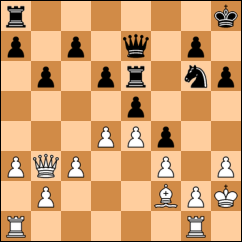
22. f5!

Completely overlooked. White exploits the absence of the bishop to launch the final attack.

22. .    Kh7

If 22....  Kg7 I was concerned about 23. Qc3+ f6 24. fxg6 but this would have been preferable to what happened.

23. fxg6+ fxg6
24. Rf7+ Kg8
25. Qxh6!

White finished in fine style.

25. ... Kxf7
26. Rf1+

My only consolation is that I saw a mate in two (26. Qh7+ Kf8 27. Rf1) and White did not.

26. .... Kg8
27. Qxg6+ Kh8
28. Rf7 Resigns

A shocker! One of those games you like to forget.

Thursday, 21 January 2016

Game 17 - club match. Swale vs Hastings

Swale vs Hastings - Board Three
Thursday 21 January 2016
White: K. Nevols - Black: D Harvey (147)

This time our Hastings counterparts made the journey north up to our way - not a bad feat considering they did it on a dark winter's evening

1. e4 e5
2. Nf3 Nc6
3. Bb5

The Ruy Lopez. I've decided to ditch the Guioco Piano and go back to an opening I know something about.

3. ....   Bc5

This is known as the Classical Defence (or Cordel Defence). Apparently 4. c3 is the most common reply when Black could go for 4. ... f5 (the Cordel Gambit) or the more solid 4. .   Nf6.
White's 4th move alternatives are 4. O-O or even 4. Nxe5.

Not knowing this I decided just to act solid but lose a tempo in the opening.

4. d3 Nge7
5. O-O d6
6. c3 O-O
7. d4

Missing the tempo but d4 has to be done in the Ruy.

7. ... exd4
8. cxd4 Bb6
9. h3

Another standard Ruy move to avoid the knight getting pinned.

9. ... Bd7
10. Nc3 Ng6

The knight looks slightly out of place here so I try to think up some ideas of a kingside attack.


11. Bg5 f6
12. Bc4+ Kh8
13. Be3

Defending the d4 point.

13. ....  Qe8

The computer thinks I now have a clear advantage (0.5) and suggests a number of ways of consolidating with a3, Rc1, Re1, Qe2 preparing d5 or Qc2 thinking about Nd5.

14. Kh1

I had given some thought to 14. h4 but Black simply has 14. ... Bg4. Instead the point of this move is to make space for the knight to retreat so I can get f4 in. (I can't retreat the knight to d2 as then the d4 pawn hangs).

14. ... Nce7
15. Ng1?

Wasting time with the knight gives away all of the advantage. Just calmly gaining space with 15. a3 or 15. Re1 is better.

15. ...  f5!

But Black counters first. This move put me off balance. If now 16. f4 then fxe4 17. Nxe4 Nf5 18. Qd3 Qxe4! winning a piece. 16. exf5 Nxf5 looks ugly but is probably better than the text. I did not like the idea of all those pieces heading towards my king. 16. exf5 is better than the move I played.

Another idea is 16. f3 with a possible line being 16. .. fxe4 17. fxe4 Rxf1 18. Qxf1 Ne5!?

16. Nf3?!

Instead I decided to waste more time and aim for the g5 square.

16. ... fxe4

If now 17. Nxe4 then simply d5.

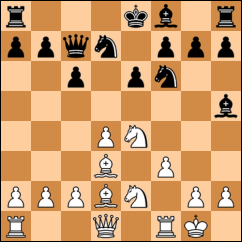
17. Ng5?

I am now threatening Nxh7 which Black cannot retake Kxh7 because of Qh5 mate. The plan is to retake the pawn with this knight after 17. ... h6.

17. .... Nf4

For some reason I had completely overlooked this move. I now can't retake on e4 as if 18. Ngxe4 then 18...  d5.

(One line is 19. Bxf4 Rxf4 20. g3 Rxe4 21. Nxe4 dxc4 which would leave Black with two bishops for the rook - or 20 ... Bxh3 with a choice of 21. Rf1 Bg4! with Qh5 to come or 21. gxf4 Bxf1 22. Qxf1 dxe4 23. Nxe4 Bxd4 and Black is a pawn up).

Now 18. Bxf4 Rxf4 19. Nf7+ is an idea to try to make the position clearer. Then 19. .. Rxf7 20. Bxf7 Qxf7 21. Nxe4 Bc6. Material is even but the position looks uncomfortable.

(The computer recommends a bit of grovelling with 18. Qd2 d5 19. Bb3 Nd3 20. Nxd5).


18. d5

Instead, after much thought, I decided to isolate the e-pawn to pick it up later. Black now has the initiative.

18. .... Qg6
19. Bxf4 Rxf4
20. Ngxe4

Better (although not by much) is 20. g3. Now Black has the option of taking both knights for the rook but plays more conservative with his attack.

20. ..... Qh6
21. Qd3 Raf8
22. Ne2 Rf3!!


While he was thinking, I too was thinking over whether Black could play this. I could not see anything concrete and figured that, as he had the better position anyway, it was not worth it taking chances. (Going through the position afterwards, I see that this now wins by force).

23. gxf3 Qxh3+
24. Kg1 Rxf3
25. Qd1

A few moves later I was kicking myself for choosing the wrong square, as the bishop is undefended and gets picked up by the follow sequence. But 25. Qc2 loses to 25. ... Bf5.

25. ...   Qg4+
26. N2g3 Rxg3+
27. Nxg3 Qxg3+
28. Kh1 Qh4+
29. Kg1 Qxc4

So Black has three minor pieces and two pawns against White's two rooks.

30. Qf3 Qg4+
31. Qxg4 Bxg4


Now outnumbered on both sides of the board, with the d5 pawn seemingly a goner, I could see that a grim defence is in prospect. I could not see how I could defend this position but now surprise myself by putting up a bit of a fight. First, I limit the options for Black's white squared bishop.

32. Re1 Ng8
33. Kg2 h6
34. f3 Bd7
35. Rad1 Nf6
36. b3 Be8
37. Re7 Kg8
38. Re2 Bf7
39. Red2 Nd7

So far so good. The staunch defence of the d5 pawn holds up Black's initiative.

40. Kg3 Kf8
41. Re2 Nf6
42. Red2 Ke7
43. Re2+ Kd7
44. Red2 Bc5
45. Kg2

I haven't really got anything else to do.

45. ... c6

And Black gives up hope of winning the pawn and decides to swap it off. (45. ... Nh5 with Nf4 and Be3 will capture the d5 pawn).

46. dxc6+ bxc6
47. Rc2 Bd5

Good positioning of the bishops although in the way of the pawns.

48. Kg3 Bb6
49. Re1 Bf7
50. Rg2


And now with less than five minutes left on my clock I stop writing down the moves. My opponent had a few extra minutes and invested some time on the moves ahead.

As the game progressed Black did manage to advance the c- and d-pawns. My rooks were buzzing to and fro trying to be a nuisance and avoiding several forks and pins while the pawns and pieces came closer, like a game of Space Invaders. I entered my last minute and began moving at lightning speed before blundering away a rook. With seconds left in a hopeless position, I resigned.


Sunday, 17 January 2016

Game 16 - club match. Hastings vs Swale

Hastings vs Swale - Board One
Saturday 17 January 2016
White: T. Wheeler (156) - Black: K. Nevols

Another trip down to Hastings, and another chance to enjoy the posters and cartoons and various elements of chess history. I have to say it is a very fine place to play chess. If only they had a bar, although, as I was driving, that wouldn't have been much good.

This was a six board match but we had problems in fielding a team and, in the event we had to default three boards. So I was on top and facing a tough opponent.

1. d4 Nf6
2. Nf3

I was aware that our only chance was to win all three games so I had intended to wheel out the Benko - alas I did not get the chance. One day.

2. .... g6
3. Nc3 d6
4. e4 Bg7

So it is the Pirc defence - another opening of which I know nothing. So I had to think of it as a King's Indian without c4.

5. Be3 O-O
6. Qd2 c6

6. ..  d5 is perhaps more accurate. If 7. e5 then Ne4 with a timely c5 to follow.

7. Bd3 Bg4

Normally when White as a Qd2-Be3 set up in some openings, he also has a pawn on f3 or h3 to guard the g4 square. The computer recommends here 7. ... Ng4 8. Bf4 e5

8. O-O-O Bxf3!?

Opening the g-file with the bishops pointing in that direction might not have been a wise move. A solid developing move like Nbd7 maybe.

9. gxf3 a5

Here we go! We needed a win so let's charge.


10. Rdg1?!

White told me afterwards that he thought this was a mistake and that he should have gone with the other rook and played Rhg1. As it plays, one of his rooks is out of the game.

10. ... a4
11. a3 b5

I haven't really got any plan here but I was inspired by my last game at Hastings (Game Seven) where I went down in flames after a pawn change.

12. Ne2

Preventing b4.

12. ....  Qb6

A safe square as I was intending to answer 13. d5 with c5.

13. c3 c5

Now I was beginning to enjoy myself.

14. e5!

White finds a way to counter.

14. ....  Nfd7
15. f4

I now had a big think and made the wrong move - as often happens after big thinks. I was concerned about f5 and considered moves such as Kh8, Rc8 and b4. I ruled out 15. .. b4 because of 16. dxc5 dxc5 17. cxb4 Rc8 18. Kb1 and I am just a pawn down.

But is White threatening f5? It just loses a pawn on the e5 square. On my scoresheet (later on) I wrote down Rc8 and think this is the best move but White gets a lot of play with 16. Be4.

(The computer recommends 15. ... cxd4 with 16. .. Nc5 and judges the position as equal).

15. .... e6?

Instead I play this with the intention of permanently ruling out f5 without realising that it blunders away a pawn.

16. exd6 Qxd6?

A second blunder which I played quickly. Had I realised that the b-pawn was loose I would have played 16. ... c4. Then 17. Be4 Ra6 18. d5 Nc5 19. Bxc5 Qxc5 20 dxe6 Rxd6 (or maybe 20 ... fxe6 straight away) 21. Nd4 (21. Qe3 Qxe3 22. fxe3 Rxe6 wins a pawn) Bxd4 22. exf7+ Rxf7 23. cxd4 Rxd4 24. Qe2 and I could be better here.

17. Bxb5 cxd4
18. Bxd4 Nc5
19. Bc4 Nc6


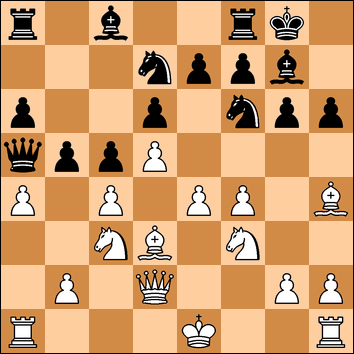
So White is a pawn up, has a passed pawn on the c-file, attacking chances against the black King including an open g-file and two good bishops. It don't look good. The only negative is the fact that his extra pawn is doubled.

My only chance of getting something is to try to activate my knights and rooks towards his king.

Now White forces off the exchange of queens.

20. Bxg7 Qxd2+
21. Kxd2 Kxg7
22. Ng3 Rfd8+
23. Kc2 Na5
24. Be2

My plan now is to rotate my knights to dominate the c4 square, and put a rook on b8 to aim at b2 and perhaps a3. If I can sac a knight for two of the queenside pawns I have holding chances.

24. ....  Nd7
25. Rd1 Nb6
26. Rxd8 Rxd8
27. Rd1 Rb8

On with the plan. I thought a further exchange of rooks would just increase the strength of his queenside pawns. Another line is 27. ... Rxd1 28. Bxd1 Nd5 29. Ne2 Nc4 and then activating the king.

28. Rd4 Nc6
29. Rd6 Na5

Pushed around so far.

30. Rd4 Nc6

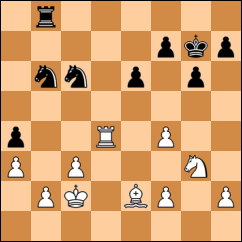
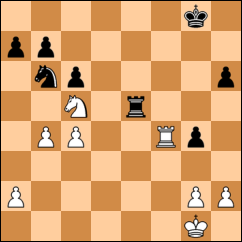
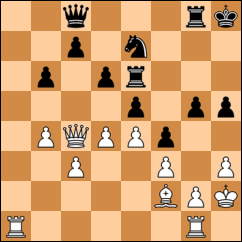
I now expected 31. Re4 to avoid the repetition. Bb5 is now threatened so Black has to play 31. ... Na7. White then has 32. Bd1 Nc8 33. Kc1 Ra8 34. Rb4 and I am completely tied up.


31. Rd6?

But what's this? Surely he is not going to allow a repetition.

31. ....  Na5
32. Rd4

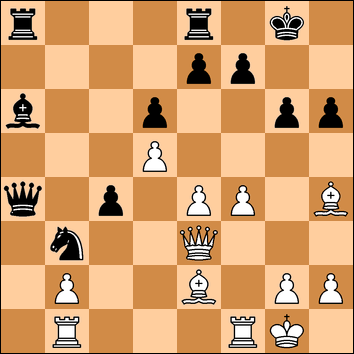
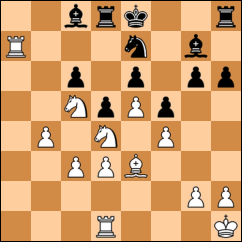
And he has! This is the third time this position has appeared so a draw it is. I breathed a big sigh of relief.

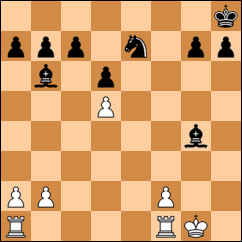
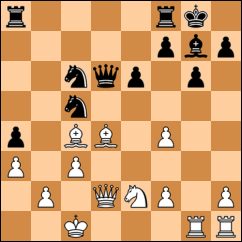
The computer comes up with the following at the above diagram. 31. Re4 Ne7 32. Bb5 Ra8 33. Rd4 Ned5 34. Bc6 Ra5. Although White is still ahead, it proves to be not easy to advance the c-pawn. With the king on the c-file Black has Rc5,and with the king on b1 or a2 there are some lines where the Black can sac his rook on c3 and get a knight fork.

Whether I would have had the skill to defend that position is another question, but I was relieved at the draw.

Thursday, 14 January 2016

Game 15 - Swale Club Championship 2015-16 - Round Seven

Swale Club Championship - Round Seven
Thursday 14 January 2016
White: K. Nevols - Black: D. Marsh (103)

With two wins, two draws and two losses, I was settled in mid-table in the Club Championship with four games to go. The top five (our of eleven) would go through to the final group and so a win here was important to keep me in contention.

1. e4 c5

My first encounter this season with the Sicilian Defence.

2. Nc3

I once had a spell with the Grand Prix Attack (2. f4) but, after being influenced by some games by Boris Spassky, adopted 2. Nc3 with a closed Sicilian in mind. The advantage of this system is that the first few moves virtually choose themselves.

2. ... Nc6
3. f4 e6
4. Bb5 g6?!

This doesn't seem to go with the previous move and so perhaps Be7 is better.

5. Bxc6 bxc6
6. Nf3 Bg7
7. O-O Ne7

Playing to e7 rather than Nf6 has the advantage of not blocking the bishop, and d5 can be prepared.


8. Qe1

I usually prefer to wait until Black has castled before thinking of the Qe1-g3 or -h4 manoeuvre but decided at this stage to prepare d3 without having to worry about doubled pawns. Although perhaps I should not worry about 8. d3 Bxc3 9. bxc3 d5.

8. ... Bd4+

A surprise. Usually the king has to go to h1 anyway if Black thinks of Qb6. Maybe Black ought to castle or play Ba6.
I considered 9. Nxd4 exd4 10. Ne2 Qb6 11. d3 d5 but didn't like it much. As there are some holes in Black's position I decided to keep the knights in case they become useful (as they do!).

9. Kh1 Ba6
10. d3 d6

10. .. d5 might have been more energetic or just castling.

11. Qh4

Threatening Nxd4 cxd4; Qf6 winning a pawn. If Black castles here, White can whip up an attack with 12. Ng5.

11.     Kd7!?

An imaginative move. This connects the back rank and finds a comfortable spot for the king. So now I am thinking of how I can open some central lines.

12. Ne2 Bg7

Now 13. Ng5 is interesting. Black could meet it with Qf8 or Qg8. Is White then able to sacrifice a pawn with f5? Instead I decide to centralise the rook with a long term plan of d4.
(After 13. Ng5 the computer recommends 13. ... Ke8!? which would rather defeat the purpose of moving the king in the first place).

13. Rd1 h6
14. Qf2

Defending the knight and continuing to prepare d4.


14. .... d5?!

Black decides to get rid of his doubled pawn problem ... by sacrificing one of them! I don't know if this was an oversight or a sacrifice to ensure the exchange of queens but I get a clear pawn up.

15. Qxc5 Qb6
16. Qxb6 axb6

For his pawn, Black has two well placed bishops and straightened out pawns with possibilities of a break on the queenside. White however can now close down the position to block the bishops and try to find good squares for the knights.

17. c3 f5
18. e5 Ke8
19. b4!

I want to put a knight on the d4 square and this is to deter c5

19. ... Rd8
20. Be3 b5?


A positional mistake which blocks in one bishop and weakens more squares. 20. ... Rb8 looks ugly but holds. My plan is now to get the knights onto the c5 and d4 squares and advance on the queenside to open the a-file and get the rook into play. His bishop on the kingside is out of the game.

(After 20. .. Rb8 the computer recommends 21. a4 and then a5).

21. Ned4 Kf7
22. Nb3 Bc8
23. a4! bxa4
24. Rxa4 Bd7
25. Nc5

Knight number one is in position and the a-file is open. Going well so far.

25. ... Bc8
26. Ra7 Ke8
27. Nd4

And now his friend joins him. The e-pawn cannot be defended. If 27. ... Kf7 then 28. Nxc6.


27. ... g5

Seeking counterplay to activate the kingside pieces who have not done anything yet.

28. Ndxe6

An improvement might have been 28. Rxe7 Kxe7 29. Nxc6+ Ke8 30. Nxd8 Kxd8 31. Ra7. White is two pawns up, has a passed pawn to run with, and has ideas around Ra7 or Ra8.
28. Ncxe6 might also be more accurate so the other knight keeps an eye on c6 and f5.

28. ... Rg8
29. Nxd8 Kxd8
30. fxg5

30. g3 might be better keeping the centre together and if the g-file opens there is the Rg1 possibility.

30. ..  Bxe5
31. d4 Bd6
32. gxh6 f4

I had overlooked this move.

33. Bf2 Rh8
34. Bh4 Rxh6
35. Bxe7 Bxe7

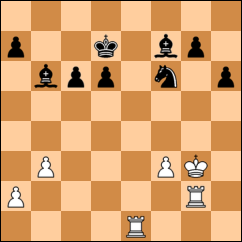
I am the exchange and two pawns up. However I am rather worried about those two bishops. If they can take active positions in the direction of my king, things could get difficult. So my plan now is to exchange one of them.

36. Rf1 Bd6
37. Nb7+ Bxb7
38. Rxb7 f3
39. Rxf3 Rxh2+
40. Kg1 Rh6

Now I am happier. I am about to get rook activity and one more exchange should finish things off.

41. Rff7 Re6
42. Rh7 Re8+
43. Kf2 Re7
44. Rh8+ Re8
45. Rxe8 Kxe8
46. Kf3

Preparing to advance the g-pawn.

46. ... Bf8

47. Rc7

Picking up the c-pawn. Black now decided to call it a day and resigned.

I was very happy with this win and unusually don't think I made any mistakes. My championship record was now Played 7 Won 3 Drew 2 Lost 2 and I was in 5th place out of 11.

Thursday, 7 January 2016

Game 14 - Swale Club Championship 2015-16 - Round Six

Swale Club Championship - Round Six
Thursday 7 January 2016
White: T. Owen (170) - Black: K. Nevols

My first game of 2016 and a very tough opponent to start with. There are two very highly graded players at the club - I had already lost to one and now here is the other.

1. e4 d5

My usual first move against a strong opponent. He had expected me to play 1. .. e5 as in my last club game when he was intending 2. f4 and the Kings Gambit.

2. exd5 Qxd5
3. Nc3 Qa5
4. d4 Nf6
5. Bd2 c6
6. Bd3 Bg4
7. f3

White opts for the system of f3 and Nge2 to slowly develop. Nothing wrong with this. Nf3 is considered to be more active.

7. .... Bh5
8. Nge2 e6

All standard developing moves. Now I was a little concerned about 9. Bf4 although of course there is nothing wrong with 9. ... Nd5.

9. O-O Qc7

I think this is inaccurate and 9 ... Be7 or 9. Nbd7 is more solid. For some reason I am still concerned about Bf4.

10. Ne4 Nbd7


11. b4?!

A new plan. Normally White will try to keep his advantage in development and will play something like c4 or N2c3. Black still has to develop a bishop and castle.
11. Bf4 again is also adding pressure forcing 11. ... e5 with perhaps 12. dxe5 Nxe5 13. Nxf6+ gxf6 14. Nd4 and the f5 square is just waiting for a piece to arrive. (14.... O-O-O might hold with 15. Bf5+ Kb8 and White's knight on d4 is awkward).

The plan with b4 is to start an advance on the queenside with maybe c4, Rc1/b1 and b5 but it strikes me as too slow. Here the computer recommends 11. .. Nxe4 answering 12. fxe4 with 12.  ... e5 and answering 12. Bxf4 with 12. ... Nf6.

11. ....  Be7

But I opt for development.

12. Qe1!

A multi-purpose move with the option of a kingside attack and adding to the defence of b4.

12. ... O-O
13. Rb1 Nd5
14. c4 N5b6

Normally I don't like putting the knight here in this system as it is vulnerable to a4-a5 or Ba5. However neither is possible here.

15. Bf4 e5

The standard defence. I had given it much thought and considered 16. dxe5 Nxe5 17. Qc3 f6 18. Nd4 Qd7. White has a lot of piece play but Black might have enough resources to avoid immediate disaster.

(After 16. dxe5 Nxe5 17. Qc3/g3 f6 I now see that White has 18. Ng5! with a strong attack. 17. .... Nbd7 would be a better defence).

16. Bg5!

Instead White spots a brilliant way to attack on the kingside. This was a move I had not considered. Now I should have stayed solid with 16. ... f6 with Bf7 to follow but I was worried about the weak white squares.

16. .... Bxg5
17. Nxg5 h6

If 17. ... Bg6 18. Qh4 h6 19. Bxg6 fxg6 20. Ne6 wins material.

18. Qh4!

Another move I had not seen.

18. ... Nf6

19. g4 is now a strong attack but I think 19. ... hxg5 20. Qxg5 Bg6 21. Bxg6 fxg6 22. dxe5 Nh7 23. Qxg6 Qxe5 will hold.


19. Nh3

A sensible withdrawal.

19. ... Rae8

White has 23 minutes for the next 16 moves while I have 36. Although material is equal I was very concerned abut the attack which was coming my way, so first I've got to get rid of that bishop.

20. Rbe1 Bg6
21. Bxg6 fxg6
22. dxe5 Qxe5

Back to the computer who recommends 22. ... g5 and then if 23. Qf2 Rxe5 intending to double rooks down the e-file.

Instead we now see some moves where White builds the attack up and I am scrambling around trying to hold something together. Although I felt I was on the ropes, the computer has me about 0.5 ahead!

23. Nd4 Qh5
24. Qf2 g5
25. Ne6 Rf7
26. f4 g4?

Better is 26. ... Qg4! and hitting the knight on e6 and also pinning the f-pawn against the White queenside pawns which now look vulnerable.

27. Re5! g5?

Bad. Grovelling with 27. ... Qg6 28. f5 Qh7 29. Nhf4 looks bad but after 29. .. Nxc4 White has to retreat his rook and the f-pawn goes.

28. Nhxg5!

I completely overlooked this too. Very briefly I considered 28. hxg5 29. Rxg5+ Qxg5 30. Nxg5 Rfe7 but a queen and a pawn for a rook and a knight seemed to be quite overwhelming. Instead it is back to scrambling mode.

28. ... Rfe7

28. ... Nfd7 is better.


29. Nh7?!

This looks spectacular but a recommended move is the difficult-to-see 29. Qc2! which keeps the Black queen on h5 for the discovered attack (it now can't go to g6 or h4) and also defends the c-pawn. One line could be: 29. ... Nbd7 30. Ne4 Qg6 31. f5 Qh7 32. Qf2! Nxe4 33. Rxe4 Nf6 34. Rd4 keeping the pressure up and remaining one pawn up.

29. ... Qf7

Better is 29. ... Qg6 because now White has 30. Neg5! Qg7 31. Nxf6+ Qxf6 32. Ne4 Qg7 33. Rxe7 Rxe7 34. Re1 - again still a pawn up and with pressure.

30. Nxf6? Qxf6
31. Nc5

Amazingly I am still on the board - the game is equal - and here comes the losing move. I should now of course play Nxc4. It is often the case that when you think you are out of danger that you make the final mistake.

31. .... Rxe5?
32. fxe5 Qxf2
33. Rxf2 Rxe5?

Another chance for Nxc4 and another mistake with Rxe5.

34. Rf4!

The winning move. White preserves his pawn lead.


But it is not over yet. Black could now play 34. ... g3!? 35. hxg3 Re1+ 36. Kh2 Rb1 harassing the pawns from behind and doubling White's extra pawn.

34. ...  Re7?!
35. Rxg4+ Kh7
36. Kf2 Nc8

My pieces are now very tied back and White advances his king and threatens a variety of forks.

37. Ne4 Rf7+
38. Ke3 Nb6
39. Kd4 Rd7+
40. Ke5 Rd8

To defend against Nf6+ and Rg8 mate.

41. Nf6+ Kh8
42. h4 Nd7+
43. Nxd7 Rxd7

The knights are gone. My opponent's only problem now is the clock - he is down to his last few minutes for all the game.

44. a4 Kh7
45. Rd4 Re7+
46. Kf6 Rg7
47. g4 Rg6+
48. Kf5 Rg7
49. g5 hxg5
50. hxg5 Kg8
51. g6 Re7
52. Kf6 Re8
53. Rd7 Rb8
54. Ke7

Now Rd8+ is the threat. If 54. .. Kg7 55. Kd6+ Kxg6 56. Kc7.

54. ..... b5

A Hail Mary!

55. axb5 cxb5
56. c5 Kg7
57. Rxa7 Kxg6
58. c6 Rc8
59. Kd7 Rf8
60. c7 Rf7+
61. Kc6 Rf6+
62. Kxb5 Rf5+
63. Ka4 Rf8
64. b5 Rf4+
65. Ka5 Rf8
66. b6 Rf5+
67. Ka6 Rf8
68. Kb7 Rf7
69. Kb8

White has 90 seconds left - which I decide is enough time to finish it off, so Black resigned.

It is no disgrace to lose to a better player, and I was pleased that I was able to survive the kingside attack, but disappointed with the game which I was never in. Clearly further work required.

Thursday, 10 December 2015

Game 13 - Swale Club Championship 2015-16 - Round Five

Swale Club Championship - Round Five
Thursday 10 December 2015
White: T. Jefferies (118) - Black: K. Nevols

My opponent had made a good start to the championship so I decided for this game to fight it out in the centre and try to get an early initiative. (This was also my last game before the Christmas break so I hoped for a good 'end of term').

1. e4 e5

No Scandinavian this time. Let's get to grips in the centre.

2. Nf3 Nc6
3. a3?! Nf6
4. Nc3 d6

No reason to fear 4. .. Bc5 5. Nxe5 Nxe5 6. d4 Bxd4 7. Qxd4 Nc6 and then d6 but considering the trouble I got in the Maidstone game (Game Ten) I decided to give that line a miss and stay solid. Another line is 4. ... Bc5 5. Nxe5 Bxf2+ 6. Kxf2 Nxe5 7. d4 Neg4+ 8. Kg1 which disrupts the White kingside but I did not like the look of those central pawns.

5. h3 Be7
6. Bc4 h6

Stopping Ng5. I preferred this to 6. .. Nxe4 7. Bxf7+ although the computer likes it after 7. .. Kxf7 8. Nxe4 d5 and prefers 7. Nxd4 d5 8. Bd3 dxe4 9. Bxe4.

7. O-O O-O


8. d3 Nh7

Now the troops are in their positions I decided it was time to think of a plan. And it is the old favourite of a kingside pawn push.

9. Nd5 Kh8
10. Nxe7 Qxe7

I was quite relaxed about exchanging this bishop, which was blocked in my pawns, for his good knight.

11. Be3

White might be thinking of a central pawn move himself working around d4, or ideas of Nd2 and f4.

11. ... f5

So I get on with it.

12. c3 f4
13. Bd2 Ng5
14. Kh2

To reinforce the h3 point.

14. ...  Qf6

To free up the e7 square to bring the knight across, and also to keep Qg6 as a future option.

15. Nxg5 Qxg5
16. Qf3 Ne7
17. d4 Ng6

The initiative continues. No need to worry about the d4 and e5 pawns staring at each other. Oddly they will continue to do so for the next 33 moves.


18. Rg1 Nh4
19. Qd1 Qe7

White has defended well although Black's attack was more a case of shove everything over there and see what happens. Now g5-g4 is in my mind.

20. f3 Rf6?

A mistake losing the initiative (which was petering out anyway). g5 should have been played and just clunking forward.

21. Be1

The point is that I now cannot play my intended 21. ... Rg6 because then 22. Bf2! and Qe1 is following trapping the knight.

(The computer disputes this and gives  21. ... Rg6 22. Bf2 exd4 23. cxd4 Qg5 and then if 24. Qe1 simply Nxg2 so instead White should play 24. Kh1 or 24. Bf1 and there is nothing further for Black to do. I did not see this line.)

21. ... Ng6

A humble retreat. White now has the edge and takes over the initiative with an advance in the centre and on the queenside. My aim now is to get the other rook in the game to finish development. The kingside is fine for now although my knight is now without work and I had to see what I could do in the centre.

22. Bf2 Be6
23. Bxe6 Rxe6

Taking with the rook so that the queen still defends the d8 square for the other rook.

24. Qb3 b6

I gave some thought to 24. .. c6 but did not like the initiative coming from 25. d5 with Rd1. I was aiming to close down the centre. Of course 24. ... Rb8 loses a pawn to 25. dxe5 and Bxa7.


25. Qd5!

A powerful centralising move which I had underestimated. Qb7 and a queenside pawn advance is coming.

25. ....  Rg8!

After much thought I came up with this defensive move of which I am quite proud. The plan is threefold - firstly, to defend along the eighth rank with the queen, secondly, to look for the right moment to throw in g5 to try to distract White and get some counterplay, and thirdly the rook is defended by the king to give him something to do and save someone else from the job.

26. b4

If 26. Qb7 a5 27. b4 axb4 28. axb4 Qd8 29. Ra7 Re7 30. Rga1 begins to look dangerous but I might be able to hold. I was thinking of 26. Qb7 c5 where one line is 27. Qxe7 Rxe7 28. dxc5 dxc5 29. Rgd1 intending to double up and play b4. Instead White plans to prevent any of this a5 or c5 nonsense and get on with the advance.

(Our electronic friend recommends 26. Qb7 exd4 27. cxd4 c5 28. Qxe7 Rxe7 29. Rac1 and then Rgd1).

26. ...  Qe8
27. Qb7 Qb8

The conclusion of my defence plan. Exchanging queens would blunt White's attack. Maybe 27. a4 is more accurate but that is on its way anyway.

28. Qd5 Qc8
29. a4 Ne7

At last! The knight returns from unemployment to join the defence.

30. Qc4 g5
31. a5 h5

So far so good. I am answering White's play on one side with an advance in the other. Nigel Short once said 'If in doubt, push a pawn'.

32. axb6 axb6

(The computer states this is a mistake and prefers 32....  cxb6. Like me, it is worried about the upcoming Ra7. However, recapturing with the c-pawn never once occurred to me as I like pawn chains to be united and the a-pawn capture looks more natural).


33. Ra8

A clever tactic. 33. .. Qxa8 34. Qxe6 Ng6 35. Qf6+ wins a pawn. I was more worried about 33. Ra7 and hoped I could make some sort of defence around 33. .. c6.

(Back to the computer who states I am right to be concerned. It does not like c6 and gives 33. .. c6 34. dxe5 b5 35. Qa2 dxe5 36. Bc5 with Rd1 and Ra8 as possible future attacks. It comes up with the ingenious move 33. .. g4!? 34. Rxc7 b5! - with one line being 35. Rxc8 g3+ 36. Kh1 bxc4 37. Rxg8+ Kxg8 38. Be1 d5 - a pawn down but mixing it in the centre).

33. ....  Qd7
34. Rxg8?

I was relieved to see this. Again 34. Ra7 was my main concern. 34. .. Rc8 35. d5 Rg6 36. Bxb6 cxb6 37. Rxd7 Rxd4 38. Rxe7 Rxc3 39. Ra1 Rg7 40. Re6 Rd7 41. Ra6 looks like it a win for White.

34. ....  Nxg8
35. Ra1 b5!

I was really pleased to find this move. Again I feared Ra7 but by dislodging White's queen from her excellent post, the attack is blunted. If now 36. Qd5 I intended c6.

36. Qa2 Rg6

Now I have a little time I can get back to the long forgotten plan of a kingside attack.

37. Qa8 g4

The plan is simply to open a line against the king.

38. Bh4 gxh3

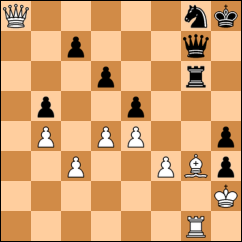
Now I had planned 39. gxh3 Qg7 40. Ra2 exd4 (remember those two pawns who have been facing each other all this time). White could also play 40. d5 as Black's attack looks more dangerous than it actually is. After 40. ... Rg2+ 41. Kh1 Black has nowhere left to go and White threatens the fork Qe8.

39. g3?

Instead White tries to mix things up with a temporary pawn sacrifice but this is where the tide turns.

39. .... fxg3+
40. Bxg3 Qg7
41. Rg1 h4

Now if 42. Bf2 then simply Rxg1 and Qg2 checkmates.


42. Qd8

I did not see this move. Now some thinking time resulted in a sequence where I could win a piece for a pawn.

42. ... hxg3+
43. Rxg3 Qf6

Nothing wrong with 43. .. Rxg3 44. Qh4+ Nh6 45. Qxg3 Qxg3+ 46. Kxg3.

44. Qxf6 Rxf6
45. Rxh3 Rh6
46. Kg3 Rxh3+
47. Kxh3

The last task is now to mop up. White has one pawn for the piece. I must not make any silly mistakes to lose or exchange too many pawns.

47. ... Kg7

Now if 48. dxe5 dxe5 49. Kg4 Kf6 50. f4 exf4 51. Kxf4 Ke6 White may be able to move the king over and exchange off the b-pawn but if I can hang on to the c-pawn I should be home and dry. As it happened, I was allowed to advance quicker than I anticipated.

48. Kg4 Kf6
49. Kh5 Ne7
50. Kg4 exd4

Exchanged at last.

51. cxd4 Nc6
52. d5 Nxb4
53. Kf4 Nc2
54. Kg3 Ke5
55. Kf2 Kf4
56. Ke2 Nd4+
57. Ke3 Nxf3

And now White resigned. A pleasing win after a tough battle.