Thursday, 27 April 2017

Game 65 - Swale Club Championship 2016-17 - Final Group Round One

Swale Club Championship - Final Group - Round One
Thursday 27 April 2017
White: I. Lappin (125) - Black: K. Nevols (134)

And so into the final group - five more games and there were three of us in the hunt.
My opponent was well known for his unusual opening play so I had no idea what to expect.

1. g3 f5

So I decide to convert the game into a Dutch defence

2. d3 Nf6
3. Bg5 e6
4. Nc3 Be7
5. h3 Nc6

With a white pawn on d4, this move can be difficult to make - but no problems here.

6. a3 d6
7. Bg2 O-O
8. Bc1


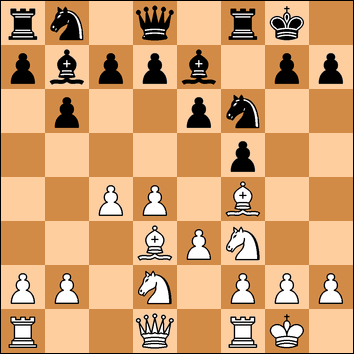
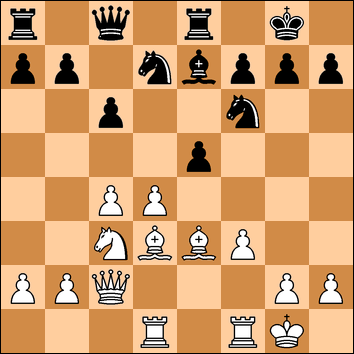
A few tempi ahead, it was time to think of a plan. I decide to advance on the kingside - although it may have been wiser to see where White will be putting his king. So perhaps d5 with d4 and e5 advancing in the centre would have been an idea.

8. ....  Qe8
9. b3 Qg6
10. e3 e5
11. Nge2 a6

This was to prevent Nb5 but with White shadow boxing from a distance I was already getting frustrated.

12. Bb2 Be6
13. Qd2 Qf7

To consider options of g5 and/or e4 (after d4) without allowing Nf4.

14. O-O-O Rab8


White has set up a sort of reverse hedgehog defence - the pawns looking very spiky - and has castled so I can start to think of a plan. However 14. ... Rab8 was not the best move. It was played to allow me to move the knight - but 14. .. d5 is more energetic. The game is now equal and we now go into some exchanges.

15. d4 exd4
16. Nxd4 Bd7
17. Nde2 Ne5
18. Nd5 Nxd5
19. Bxd5 Be6
20. Bxe6 Qxe6


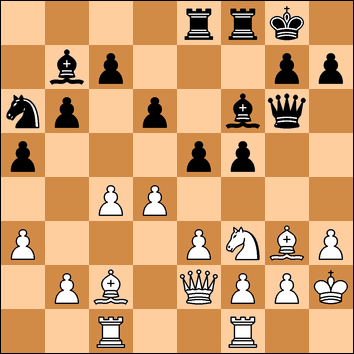
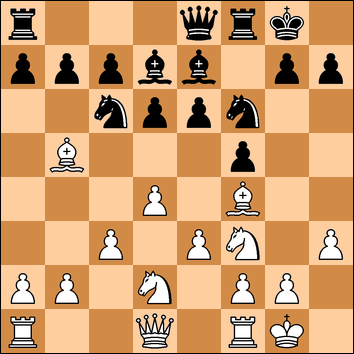
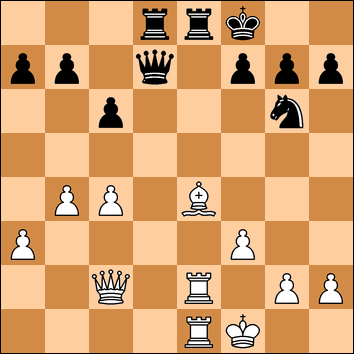
21. Qc3! is good - hitting the c7 pawn and threatening f4. Black has to play 21. ... Qf7 22. Qxc7 Rfc8 23. Qa5 Qxb3 getting the pawn back. After 24. Qd5+ Qxd5 25. Rxd5 he has the advantage.

21. Qd5 Qxd5
22. Rxd5

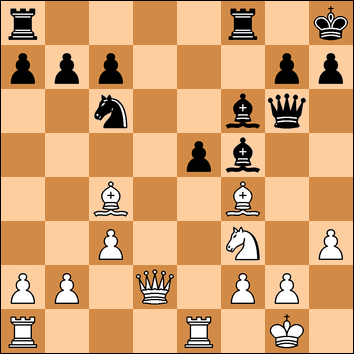
The position is level but White now has the option of a kingside initiative. My pieces are not so well placed so I decide to make some adjustments.

22. ...  c6
23. Rd1 Kf7
24. f4 Nd7
25. Nd4 g6
26. g4!

White's intention is to open up the kingside for his rooks to oppose the black king.

26. ....  c5
27. Nf3 Ke6

A case of active defence - by getting the king out of there - and connecting the rooks along the eighth rank.

28. g5 b5

Now trying some active play of my own.

29. h4 Rg8
30. Rde1!


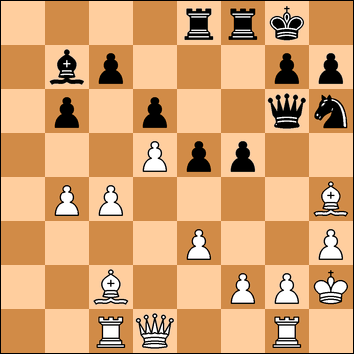
The computer prefers 30. h5 (although that is coming) but this move is strong, threatening e4 and to make play against the king. I thought that things are now getting grim and I've got to get those bishops off. First, e4 must be prevented.

30 .    d5
31. h5 Bf8
32. hxg6 hxg6
33. Rd1 Bg7

I was relieved to regain some control of the h8 square and maybe some thoughts of using the h-file myself.

34. Rh2 Bxb2
35. Kxb2 Rbe8
36. Rhd2 Nb6
37. Ne5

I was getting some sense of hanging on a cliff. The position is just about holding.

37. ...   c4
38. Rh2 Nc8

39. Rh6 Ne7 40. Rdh1 was a worry, but could I open a counter attack against White's king?

39. Nc6 Ne7
40. Nd4+ Kd6
41. Rh6 Ref8

I considered 41. .. Rh8 42. Rdh1 Rxh6 but 43. gxh6 and a later h7 was a concern. The text was to defend the f5 pawn and allow the knight to move.


42. Nf3 Rh8
43. Ne5 Ke6??

In time trouble, and after balancing on the ledge for so long, at last Black cracked. 43. .. Rxh6 was the only move, although, as I said, 44. gxh6 worried me.

But now pawns topple and the game is lost.

44. Nxg6 Nxg6
45. Rxg6+ Ke7
46. Rxd5 cxb3
47. Kxb3

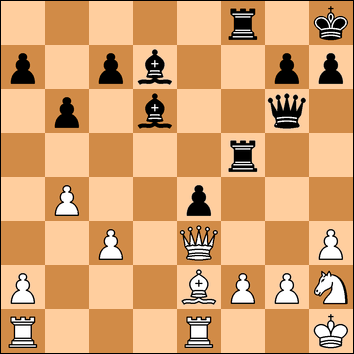
So down to the last hope. If I can get the rooks buzzing around the white king, there would be a small chance of perpetual check. There would also be a bigger chance of Black getting checkmated.

47. ...     Rh3
48. Re5+ Kd7
49. Rxa6 Rc8
50. Rae6 Rh2
51. Re7+ Kd6
52. R5e6+ Kd5


53. c3?!

After 53. Rf6 then 54. Re5 mate is unstoppable.

53. ...   Rh1
54. Re5+ Kd6
55. Re8 Rc4
56. Rxb5 Rc6
57. Ree5 Kc7

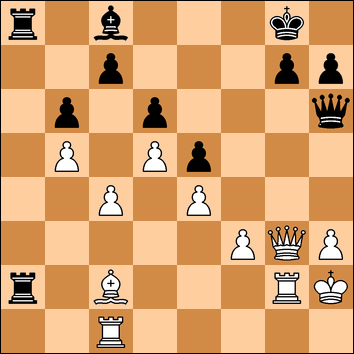
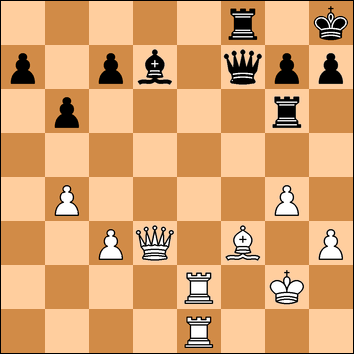
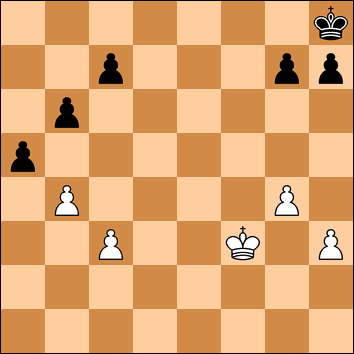
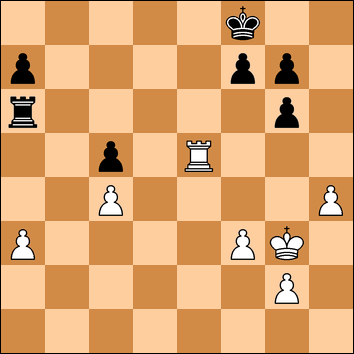
Both of us were low on time and now in my last five minutes I could stop writing down the moves. My rooks kept buzzing to the king, and White carefully guarded against the perpetual. Several moves later, we got to the following position.


White now defended the threat against the c-pawn with Rb3 - and, to my general amazement, I played Re4 checkmate.

A very fortunate victory.


Thursday, 20 April 2017

Game 64 - club match. Swale v Beckenham

Swale vs Beckenham - En Passant Cup - Semi-final - Board Three
Thursday 20 April 2017
White: K. Nevols (134) - Black: M. Maurant (129)

The semi-final, and we were at home. This is the first time I had played in a match with an arbiter present!

1. e4 e5
2. Nf3 Nc6
3. Bb5 d6

This is known as the Ruy Lopez Old Steinitz Defence - a solid defence - and the second consecutive time I had faced it. So this time I try a different line.

4. d4 exd4
5. Nxd4 Bd7
6. Nc3

Not knowing much about this opening I decide to develop calmly. It didn't look too threatening to me.

6. ...  g6

I gave some thought an immediate 7. Be3 with the idea of Qd2 and castles queenside, but decided to just play naturally.

7. O-O Bg7
8. Be3 Nge7


Throughout Black had avoided the usual Ruy Lopez move ... a6. It was time to think of a plan. Aware of my seeming inability to win dull even positions, I decided to mix it up a bit by throwing the f-pawn forward - a move which is becoming very common in my games. The computer recommends 9. a3 to wait and see and also to protect against a future excursion with Nb4.

9. f4

Castling for Black now makes for an even game. Instead we go into some exchanges.

9. ......  Nxd4
10. Bxd7+ Qxd7
11. Bxd4 Bxd4
12. Qxd4 O-O

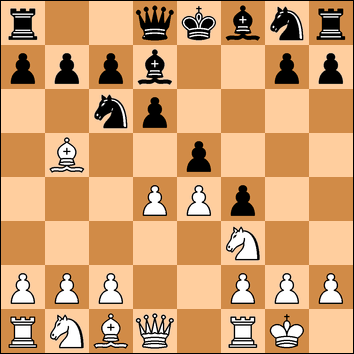
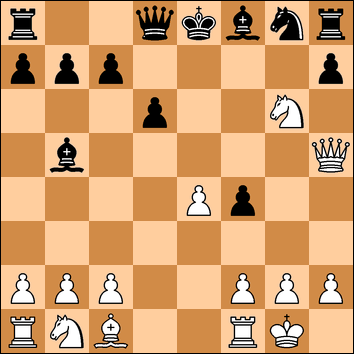
This reminded me of the story where the great Victor Korchnoi asked an arbiter in a match if he could castle when his rook is being attacked. He said it had never come up before. Well, the answer is yes and here is an example.

No bishops on the board and some spaces around the black king. I figured I had a small edge so it was time to try to unsettle my opponent.

13. Rf3!

I quite like this move showing aggressive intent. But time trouble strikes again - I am now down to 41 minutes for the next 22 moves. (The time control is 75 minutes for 35 moves and then 15 more minutes each for the rest of the game). I think the problem could be that I am so concerned about being blasted away in 20 moves that I spend too much time examining the early positions.

13. ....  Nc6

Now where shall I put Her Majesty? The c4 seemed best but a little exposed. I decided to retreat while I thought about what to do next.

14. Qd2 Rae8

I considered 15. f5 with the idea of a later Qg5 or Qh6 but did not want to give up the e5 square for a black knight. Instead I went for the best looking move, a good square for the knight and to threaten a fork. But now only 31 minutes left to reach move 35.

15. Nd5 f6?!

Better is 15. .. Qd8. This allows a slight weakness.

16. Qc3 Qg7
17. Qc4

17. Qb3 winning the pawn on b7 is an option but it also gives up the pawn on e4.

17. ....   Kh8


The computer recommends 18. Re1 and regards the position as being completely equal. I agreed and decided to try for an advantage by unsettling that knight on c6.

18. b4??

After I played this, I saw with horror that the rook on a1 was undefended and Black could now take over the initiative with 18. .. f5. Grumbling internally I set to work to find a rescue mission.

18. ...   f5

I thought there was only one move but another idea is 19. e5?! dxe5 20. Rd1 although Black has the pleasant choice of 20 ... e4 or 20. .. exf4 - remaining a pawn up either way.

19. Re1

I examined 19. .. Qd4+ 20. Qxd4 Nxd4 21. Rf2. Black has 21. .. Rxe4 and I cannot bag a pawn with 22. Rxe4 fxe4 23. Nxc7 - not because of 23. .. Rc8 (when White could play 24. Rd2! evening up the game) - but because of 23. .. e3! and White is close to resignation.

Much to my relief, Black did not play the winning move and, by then defending the d4 square, we were back to equality.

19. ...  Rf7?
20. c3 Nd8
21. Rfe3

With 13 minutes left for 12 moves (my opponent had 23 minutes left) I was feeling a bit happier and could see this petering out to a draw - probably a fair result considering my earlier blunder.

21. ...  c6
22. exf5

Black must now play 22. .. Rxe3 23. Nxe3 gxf5. Then 24. Qd3 and White can win a pawn either with 24. .. Qf8 25. Qd4+ and Qxa7 or 24. ... Qf6 25. Nxf5! Qxf5 26. Qxf5 Rxf5 27. Re8+ Kg7 28. Rxe8.

Somewhere along the line, Black miscalculates and blunders.


22. .... cxd5??
23. Rxe8+ Rf8

24. Qc8 wins the game. Instead, stunned by the sudden turnaround of events, I decide to consolidate to a smaller but durable lead.

24. Rxf8+ Qxf8
25. Qd4+ Kg8
26. Qxd5+ Kg7
27. fxg6 hxg6
28. g3

Insurance against any perpetual check accidents.

28. ....  Qf6
29. Qc4 Nc6
30. b5 Ne7
31. Qc7 Kf8

Simple from here. Remove the black queenside pawns and then sacrifice the exchange to get down to a winning king and pawn ending.


32. Qb8+ Kf7
33. Qxb7 d5
34. Qxa7 Qd6
35. Qxe7+ Qxe7
36. Rxe7+ Kxe7
37. a4

Black now resigned.

We lost the match by 2-4 and our good tournament run was complete.

Swale v Beckenham

Keith Hyde (167) 1/2-1/2 Alan Sands (173)
Trefor Owens (167) 1/2-1/2 Jon Griffiths (147)
David Page (135) 0-1 Adrian Davey (138)
Keith Nevols (134) 1-0 Malcolm Mourant (129)
Ian Lappin (125) 0-1 Tony Foreman (128)
Dennis Simpson (105) 0-1 AJW Davey (125)

Swale 2-4 Beckenham

Thursday, 6 April 2017

Game 63 - Swale Club Championship 2016-17 - Round Eleven

Swale Club Championship - Round Eleven
Thursday 6 April 2017
White: K. Nevols (134) - Black: D. Marsh (99)

The final round of the championship. My place in the final group was secure but I needed a win to keep pace with the top two. My opponent had to win to achieve his own place in the final group.

1. e4 e5
2. Nf3 Nc6
3. Bb5 d6

This is the Ruy Lopez Old Steinitz Defence. Black intends to develop one bishop by blocking in the other. A very solid but unambitious defence based on 3. .. d6 which was popularised by Steinitz (hence the name).

Now 4. d4 is the most common move. Black could reply with 4. .. exd4 5. Nxd4 Bd7 and White can choose between 6. Nc3 or 6. O-O but the most popular Black response is 4. .. Bd7 5. Nc3 Nf6 6. O-O. There is a small trap here with 6. .. Be7 7. Re1 O-O when 8. Bxc6 Bxc6 9. dxe5 dxe5 10. Qxd8 and then 11. Nxe5 wins a pawn.

White's second most common move is the one I play.

4. O-O Nf6
5. Re1

Another option is 5. d4 but in unfamiliar waters I did not want to open things up before everything is protected. I also did not like 5. Nc3 blocking the prospect of a c3-d4 centre attack.

5. ....  a6
6. Ba4 b5
7. Bb3 Be7
8. h3

To defend against Bg4.

8. ...  O-O


Now my next few moves are just to develop slowly.

9. c3 Bb7
10. d3 h6
11. Nbd2 Na5
12. Bc2 Nc6

It might have been more in the system of the Ruy Lopez to play 12. .. c5 as I have gained two tempi. I continue the knight on its journey.

13. Nf1 Nh7!?
14. Ne3 Ng5

Black's plan seemed to be to exchange pieces.

15. Nf5 Nxf3
16. Qxf3 Bg5

Now the knight is quite well-placed

17. Qg3 Qf6


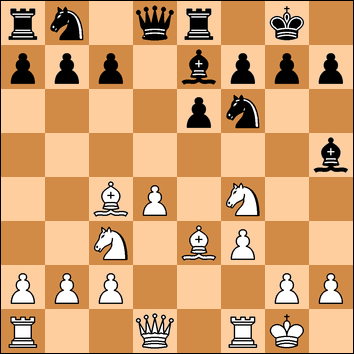
Now I gave some thought to the move 18. f4 - the aim being to open the f-file while his queen was standing there and to exploit my slight advantage in space. After 18. .. exf4 19. Bxf4 Bxf4 20. Qxf4 I could not see how I could take further advantage.

I also looked at 18. Bd1 to answer 18. .. Bc8 with 19. Bg4 but after 19. .. Bxc1 20. Raxc1 Be6 Black is doing fine.

The best move might have been 18. Bb3 and then if 18. . Na5 to strike with 19. f4. Then 19. .. exf4 20. Bxf4 Bxf4 21. Qxf4 Bxb3 22. axb3 Bc8 23. Rf1 Bxf5 24. Qxf5 Qxf5 25. Rxf5 with an even position.

I had in mind my previous championship game where I could not get out of an even position and drew, and so I needed to mix this up somehow. So I decided to prepare f4.

18. Rf1 Bxc1
19. Raxc1 Ne7
20. Nxe7 Qxe7
21. f4

More pieces had gone and already I was thinking this could be a draw.

21. .......exf4
22. Rxf4 Qg5
23. Qf2

Avoiding the exchange of queens. I figured that my only chance of a win was to build up on the only open file.

23. ....   Bc8
24. Kh1

The white bishop needs to come into the game. With this in mind, then 24. h4 Qe7 25. d4 is an improvement.

24. ...  Be6
25. Rf1 Qh5

Of course, after 25. .. Bxa2 the bishop is trapped by 26. b3. Black can get two, or even three pawns for the piece, but that gives White time to attack on the f7 point.


Now I get the time to settle and advance slowly and hope something comes up.

26. Bd1 Qg6
27. a3 f6
28. Be2 Kh8
29. d4 Rfe8
30. Re1 Bc4
31. Rg4

31. Bg4 might have been more accurate. I want to try and make use of those white squares around the Black king and continue to move pieces about.

31. ...  Qf7
32. Bf3 Be6
33. Rh4 Qf8
34. Bh5 Re7
35. Bg6 Bf7


I am preparing to call it a night. Black is set up well and I could not see a way to break through. Indeed a well-timed pawn to c5 could isolate or weaken my pawn on e4 and pass the initiative over to Black.

36. Bxf7 Qxf7
37. Rf4 Qe8
38. Re3 d5
39. Qe2

Black could play 39. .. Rd8 and offer the draw - which I might have accepted.

Instead, aware of the fact that he needs a win, he lashes out and gambles.

39. ....  g5?

A surprise. Now comes seven captures in a row which end with me a pawn up and the better position.

40. Rxf6 Rxe4
41. Rxe4 Qxe4?
42. Qxe4?

An oversight. 42. Qh5! wins very easily. Black should have retaken on e4 with the pawn.

42. ....   dxe4
43. Rxh6+ Kg7
44. Re6 Rf8
45. Kg1 Rf4


46. g3?!

The curse of the rook ending. 46. Rxa6 is simply better.

46. ...  Rf3
47. Kg2 Rd3

Black would have had better chances of saving the game with 47. .. Re3 hanging on the e-pawn.

48. Rxe4 Rd2+
49. Kf3 Rxb2
50. Re7+ Kf6
51. Rxc7 Rb3
52. Rc6+ Ke7


As I now had less than five minutes on my clock, I stopped writing down the moves - as the rules allow. With my two pawn lead I managed to advance in the centre and win the game.

Monday, 27 March 2017

Game 62 - club match. Weald of Kent v Rochester

Weald of Kent v Rochester - Stephenson Cup - Board Four
Monday 27 March 2017
White: D. Warrick (108) - Black: K. Nevols (134)

I was called in as an emergency substitute for my fourth game for Rochester, this time back at Cranbrook Library. Having been held up by traffic. I got there with minutes to spare and was surprised to find the entire Rochester team was made up of Swale players!! Without a chance to question this surprising turn of events I seated and the game began.

1. d4 f5

Another chance to try out the Dutch. Results so far were not too bad.

2. Nf3 e6
3. Bf4

Like my last game, my opponent delays c4.

3. ...  Nf6
4. e3 Be7
5. Bd3 b6

And this time I remember the advice. If White does not fianchetto his bishop on the h1-a8 diagonal then Black should do so.

The computer now recommends 6. Ne5 and replies to 6. .. d6 with 7. Qf3 forcing 7. .. d5 and White gets tied up in knots. (8. Bb5+ Kf8 or 8. .. Bd7 9. Nxd7 Nfxd7 10. Qg3 ... or 9. ...Nbxd7 10. Bc6).

Black should reply to 6. Ne5 with 6. .. Bb7. But White continues development.

6. Nbd2 Bb7
7. O-O O-O
8. c4


The computer recommends 8. h3 as it thinks that Black can now exchange the bishop and gain an advantage with 8. .. Nh5 9. Bg3 Nxg3 10. hxg3 g5. I did not see this possibility and instead decide to develop the queenside.

8. .. a5
9. Rc1 Na6

To defend the c7 point in preparation for moving the queen.

10. a3 Qe8
11. h3 Ne4
12. Qc2 Nxd2
13. Qxd2 Qg6

I was quite comfortable with my position here. White still can't play e4 and is unable to advance anywhere.

14. Bg3 d6

Keeping the white knight out of the e5 square and preparing to advance the centre pawns.

15. Qe2 Bf6
16. Kh2 e5
17. Bc2 Rae8


Now 18. c5!? is interesting with 18. .. bxc5 19. Qb5. White has possibilities such as Qxa5 or dxe5 dxe5; Bb3+ opening up on the doubled c-pawns.

Black's best might be 19. .. Bc8 then 20. dxe5 dxe5 21. Bb3+ Kh8 22. Qxa5 and then it depends on whether he sees 22. .. f4! 23. exf4 exf4 24. Bxf4 Bxb2 25. Rc2 Rxf4 26. Rxb2 Bxh3 27. gxh3 Rxf3.

So perhaps then 20. dxe5 dxe5 21. Qxa5 leaving the f-pawn pinned. Black might then play 21. .. e4 exploiting the fact that the pawn on b2 is undefended. One line could be 22. Nh4 Qh6! 23.Nxf5 Qg6 24. Bb3+ Kh8 25. Bc4 Qxf5 26. Bxa6 Bxa6 27. Qxa6 Bxb2 28. Rc2 Be5.

Instead White decides not to engage in complications and just moves the queen off the e-file.

18. Qd1

Now I considered 18. .. h5 gaining more space and threatening h4 but decided against it as I did not want a pawn on its own which I would have to defend. So instead I bring the knight into the battle. This however is a waste of time and allows White to gain space.

18. ....   Nb8
19. Rg1 Nc6
20. d5 Nd8?

This is a mistake. White can now get a big advantage with 21. Ba4! Re7 22. Nh4 Nxh4 23. Bxh4 Ref7 24.f4!
Look at the position now - White's bishops are well placed, Black's knight and rooks have literally no moves, and Black's other pieces are not happier.

Black should have played 20. . Ne7. Then 21. Ba4 Rd8.

Fortunately White does not spot the opportunity and decides to open the a-file. I note that, as it could come in useful (and indeed it does!)

21. b4 axb4
22. axb4 Nf7

Now it is White's turn to make a mistake. He should take the second opportunity to play 23. Ba4.

23. Nh4? Bxh4
24. Bxh4 Nh6??

But Black does not spot it. 24. .. Qh6 wins a piece. 25. Bg3 f4.
I completely overlooked this and was concentrating on advancing the knight and defending the f5 pawn.


I was not happy with the position now. I had taken five moves to get the knight from one edge of the board to the other! White's bishops were looking good, and a well-timed g4 from White could put my king in jeopardy. The only thing I could do was to grab the a-file.

The computer does indeed now recommend 25. g4! keeping Black on the wrong foot. Black can't play 25. .. Qf7 because of 26. g5 and so has to play 26. .. e4 then 27. gxf5 Qxf5 28. f4! and White could now put the g-file to good use and, long term, try to play Bd1-c3.

25. Qe2 Qf7
26. Bd1?!

I did not understand these moves but was grateful for the chance to grab the a-file. The bishop blocks the communication between the two rooks.

26. ....  Ra8!
27. b5 Ra5
28. f3 Rfa8

Again 29. g4 puts Black under pressure (29. .. Ra2 30. Rc2) but instead White makes the puzzling decision to exchange off one of his good bishops.

29. Bg5 Qg6
30. Bxh6?! Qxh6
31. Bc2 Bc8

At last the bishop has the chance to get back into the game.

32. Qf2 Ra3
33. e4 f4

Missing the chance to put White under pressure with 33. .. Rc3 and closing the h6-c1 diagonal. But my plan was to sac on h3 if I got the chance.

34. g4?

I thanked the heavens. This move would have been so good earlier but now it is a mistake. Lines open up against the white king.

34. ... fxg3 e.p.
35. Qxg3 Ra2

Again missing the chance for Rc3. White should now play 36. h4.

36. Rg2


While White was thinking I saw this move and that it would be a mistake. I now gave some thought into various combinations - the danger was whether White could force perpetual check. Having decided he could not, the second danger was whether I had overlooked anything. Combinations are not really my thing. Eventually I decided I had to go for it.

36. ...  Bxh3
37. Qxh3

Better (as it gets a pawn) would be 37. Qxg7+ Qxg7 38. Rxg7+ Kxg7 39. Kxh3, but Black should still win comfortably.

37. ....  Qxc1

I now saw with horror 38. Rxg7+. Does it force perpetual? 38. .. Kxg7 39. Qg4+ or 39. Qd7+Kh8 . The answer is no as Black just plays Kh8 but, before I discovered this, he played on.

38. Qe6+ Kh8

This was the position I had envisaged at move 36 and that Black now has the possibility of Qh6+.

39. Qd7 Qh6+

The move 39. .. Qf4+ would have been neater. Or simply g6 at any time in the next few moves.

40. Kg1 Ra1+
41. Kf2 Qh4+
42. Rg3 Rf1+
43. Kxf1 Qxg3

Now the advance of the rook should finish issues.

44. Ke2 Qg2+
45. Kd3 Ra3+
46. Resigns

And it is checkmate next move.

A good win but I was fortunate that White did not punish my poor play in the middlegame.

Thursday, 23 March 2017

Game 61 - club match. Snodland v Swale

Snodland vs Swale - Fuller Cup - Board One
Thursday 23 March 2017
White: R. Thompson (137) - Black: K. Nevols (134)

A trip to a cricket pavilion. It is not a bad place to play chess - it is clean and quiet with parking. My opponent was the captain of the Kent under-140 team as well as my first opponent on my 'comeback' now a year and a half ago (Game One).

Both teams had qualified for the Fuller Cup semi finals - this match would decide who tops the group and thus plays at home.

1. d4 f5

A chance to play the Dutch defence. Here White avoids c4 and the fianchetto, and allows me to set up the classical Dutch defence set-up.

2. Bf4 e6
3. e3 Nf6
4. Nf3 d6

Playing 4. .. Be7 would have been more accurate. With the White bishop on f4 and pawn on e3, then it would be difficult for White to fianchetto his king's bishop - and when White does not put a bishop on the a1-h8 diagonal then Black should aim to do so. But b6 and Bb7 is harder to do after playing d6 due to the weakness of the white squares.

An idea might be 4 ... c6 with 5 .  Qb6 exploiting the fact that White's dark-squared bishop has blocked itself off from the queenside.

5. Nbd2 Be7
6. h3 Nc6

As there is no threat of White playing d5, then I can put the knight on this square.

7. Bb5 Bd7

I was now concerned by 8. Ng5 but I think Black is OK after castling. (8. .. O-O 9. Bxc6 bxc6).

8. c3 O-O
9. O-O Qe8

Now I need to think about a plan and this move is a good contribution in order to take the queen into the kingside with the intention of initialising an attack.


10. Re1

One rule of the Dutch, which I learnt from the Simon Williams DVD, is that, where possible, White must be prevented from playing e4 and opening the e-file. This move prepares that and so Black's reply stops this idea.

10. ...  Ne4

Now 11. Nxe4 dxe4 12. Nd2 Qg6 is quite good for Black with the possibility of attacking with a well-timed e5.

11. Bd3 Qg6
12. Qc2 Nxd2
13. Qxd2 Bf6?!

Now e4 can no longer be stopped so I go to another rule from Simon Williams - that if you are unable to prevent e4 to make sure you can reply with e5. This move prepares that. But I forgot the loose bishop on d7.

I think 13. ... Qf7 or 13. .. Qh5 is better as White cannot play 14. e4 (14... fxe4 15. Rxe4 d5).

14. e4 e5

While White was thinking my heart skipped a beat as I saw 15. dxe5 dxe5 16. Bc4+ opening an attack on the bishop on d7. However on deeper investigation I saw that this does not lose material because Black can still attack White's pieces.

15. dxe5 dxe5
16. exf5

But I was quite relieved to see this move in case I had miscalculated somewhere.

16. ...   Bxf5
17. Bc4+ Kh8

Now after 18. Nxe5 Nxe5 19. Bxe5 Black must not play 19. .. Bxe5 20. Rxe5 Bxh3?? (21. Rg5) and 19. .. Bxh3 20. Bg3 Bf5 21. Bxc7 simply loses a pawn.

Black must play 19. .. Rad8! where he can met 20. Qe3 with 20. .. Bxe5 21. Qxe5 Bxh3 regaining the pawn.


Instead White who goes wrong. He decides to leave the Black e-pawn on the board, which allows me to build up an attack around it.

18. Bg3? e4!
19. Nh2 Ne5
20. Bxe5 Bxe5

Whereas a few moves over I was worried about the two White bishops dominating the board, now it is the two Black bishops who are in charge. I want to bring my last rook into the fight.

21. Qe3 Rae8
22. Kh1 Bd6!?

A pawn sacrifice. My plan was 23. Qxa7 b6 and follow with .. Bc5. I hoped to lure his queen out of the game to gather time for an attack.

23. Nf1

OK, that didn't work.

23. ....   b6

Both protecting the a-pawn but also planning Bc5, which White now prevents.

24. b4

Now best for Black is 24. .. a5 25. a3 Bd7! taking the opportunity to re-route the bishop and clear some space for Black's rook to advance down the f-file.

24. ....   Re5

However White now has the chance to play 25. Ng3. I tried to see if I could get anywhere with 25. .. Bxh3 26. gxh3 Rf3 but there is nothing. White instead decides to cover the h5 square.

25. Be2 Bd7

Dropping back at last in order to focus down the f-file.

26. Nh2?

Better is 26. Ng3 - again blocking the g-file and hitting e4.

26. ...   Ref5

This move is visually impressive (27. Qxe4 Bxh2 28. Kxh2 Bc6) but the computer says that 26. .. Rg5. If 27 Rg1 then 27. .. Rd5 with the threat of Bf4 trapping the queen - so 28. c4 Bf4 29. Qa3!? Rd2 or 29. Qc3 Be5 30. Qc2 Rd6 and Black is beginning to dominate the board.

However I have a combination in mind and, not for the first time, made a miscalculation.


27. f3 Rg5
28. g4 Bxh2?

Bad. Black should play 28... Bc6. This gives away almost all of his advantage.

29. Kxh2

And now I realised I had miscalculated. The plan has been 29 .. dxf3 30. Bxf3 Rxf3 31. Qxf3 and then 31. .. Bc6 pinning the white queen. However I had overlooked that the last move had simply nudged the white king off that diagonal so that the queen would not be pinned.

Kicking myself again I now had to re-adapt in order to get the attack going again.

29. ....    Qd6+
30. Kg2 exf3+
31. Bxf3

And now if 31. .. Rxf3 32. Qxf3 Bc6 White simply has 33. Kg1! - and the weakness of the back rank means that Black does not have time to take the queen.

Now with the foreboding thought that today would not be my day, I had to reorganise and see what happens.

31. ...   Rg6
32. Rad1 Qe6

Forced. Now my thoughts were that the queens were now coming off and if I could get the rooks off too then it would be a drawn position and I could go home and try to find where I missed the win.

33. Qd3?

Now it is White's turn to go wrong. Like me, he seems to have thought that the queen exchange would be drawish and tries to exploit the lack of coordination amongst my pieces. However this overlooks that I could take a pawn.

33. ........  Qxa2+
34. Re2 Qf7
35. Rde1??

White blunders. He needed to play 35. Bd5.


35. ....   Rd6??

35. ..  Bb5 wins on the spot. 36. Qxb5 Qxf3+ 37. Kh2 Rh6 or 36. Qd5 Qxd5 37. Bxd5 Bxe2.
I simply did not see this possibility.

36. Qe3 Re6?

Again missing 36. .. Bb5, this time with 37. Rf2 Rd3. (38. Be4 Qxf2+ 39. Qxf2 Rxf2+ 40. Kxf2 Rxc3 and two pawns up).

37. Qf2 Rf6

OK, now onto plan B ... or is it C? To exchange everything off and run with the passed pawn on the other side.

38. Re3

The computer recommends 38. Re7! Black would have to find 38. .. Qd5 and then 39. Bxd5 Rxf2+ 40. Kg1 c6 41. Rxd7 cxd5 42. Ree7 forces a draw.

38. ....   Bc6
39. Rf1 Bxf3
40. Rxf3 Rxf3
41. Qxf3 Qxf3
42. Rxf3 Rxf3
43. Kxf3 a5


Now I had another horrible sinking feeling. Had I miscalculated? His king is closer to the centre. King and pawn endings are ferociously complicated and I consoled myself with the thought that if his king was able to round up the a-pawn then my king would have time to get over and should at least get a draw - which after all the twists and turns would have been a fair result.

My worries were allayed when he made one final mistake and allowed me to force and protect the passed pawn..

44. Ke3? a4
45. Kd3 b5
46. c4 c6

White now resigned. One continuation could be 47. Kd4 Kg8 48. cxb5 cxb5 49. h4 Kf7 50. g5 g6. White's king has to keep an eye on the a-pawn making a break for it and thus Black's king can just take the kingside pawns.

A tough battle with a lot of mistakes but I was pleased with the win which ensured we finished top of the group and avoid a trip to London.

Snodland v Swale

Robert Thompson (137) 0-1 Keith Nevols (134)
Jerry Pol (124) 0-1 Tyrone Jefferies (116)
Hugh Broadbent (99) 0-1 Andrew Gillard (113)
Richard Mallery (64) 1-0 Anthony Fletcher (74)

Snodland 1-3 Swale

Sunday, 19 March 2017

Game 60 - club match. Rochester v Hastings

Rochester vs Hastings - Stephenson Cup - Board Four
Sunday 19 March 2017
White: K. Nevols (134) - Black: M. Bryant (141)

My previous game against this opponent (Game 7) had resulted in a bad defeat which had led to me questioning the wisdom of my 'comeback'. Fortunately, things have moved on and my form has improved - although this was my third game for Rochester and my score to date had been 0/2.

The game took place on a calm Sunday afternoon in Sittingbourne.

1. e4 e5
2. Nf3 Nc6
3. Bb5 f5

The Ruy Lopez - Schliemann variation. My opponent told me afterwards that he did not know anything about this opening - well, that makes two of us - but I did recall that 4. d3 was considered to be a safe response.

4. d3

Apparently 4. ... Nf6 is best for Black with 5. Nc3 fxe4. I thought 4. .. fxe4 5. dxe4 d6 looked harmless.

4. ... d6

Now this begins to look like an upside-down-wrong-way-round Queens Gambit. I decided to just continue developing.

5. O-O f4?

But this is just a mistake. Knowing my opponent's fondness for pushing pawns all over the place, as he did against me last time, I thought he might be intending g5-g4. But I have time for a counter in the centre.

6. d4!

Undermining the f4 pawn, and threatening to win a pawn on e5. Black's best might now be 6. .. Qe7 to move off the d-file and defend the e5 pawn. If 7. d5 then 7. ... a6 so White might instead play 7. Nc3 continuing development.

6. ...  Bd7


Now I studied 7. Bxc6 Bxc6 8. dxe5 dxe5 9. Nxe5 Qxd1 10. Rxd1 Bxe4 11. Re1 and that looked quite good (11. .. Bxc2 12. Ng6+ ..  or 11. .. Nf6 12. Nd2).

But then I saw something stronger - the idea of playing Qh5. Black's knight was not yet on f6 and so this was an option.

Could I sacrifice the knight? No. 7. Nxe5? Nxe5 8. Qh5+ Ng6 just loses a piece.
Then I looked at 7. Bxc6 Bxc6 8. Nxe5? dxe5 9. Qh5+ Ke7 10. Qxe5+ but could  not see anything after 10. .. Kf7 11. d5 Bd7 (although 12. Qxf4+ gathers a third pawn for the piece).

But I did not need to sacrifice. I went back to the earlier line with the modification of exchanging on e5 before swapping on c6.

7. dxe5 Nxe5??

This is a mistake. With 7. ... dxe5 Black is losing but still on the board.

My first thought was just to gather the booty with 8. Bxd7 Qxd7 9. Bxf4 - a clear pawn up with advantage.

But after 8. Nxe5 the follow-up move of Qh5-e5 really is a threat. I looked at 8. Nxe5 dxe5 9. Qh5+ Ke7 10. Qxe5+ and then taking on f4 would leave me two pawns up.

After checking Black's other option (8. ...  Bxb5) I went for it.

8. Nxe5 Bxb5

Black told me he allowed this move because he said I would have too many pieces en prise - and indeed there are two at the moment.

9. Qh5+ g6

I had considered 9. .. Ke7 10. Ng6+ before realising that 10. Qf7 mate would be better.

10. Nxg6

If now 10. .. Nf6 then 11. Qxb5+ c6 12. Qxb7 hxg6 13. Qc6+ and I am three pawns up.
Or 10. .... hxg6 11. Qxh8 Bxf1 12. Qxg8 Ba6 13. Qxg6+ and I am two pawns up.
or 10. ... hxg6 11. Qxb5+ and 12. Qxb7 with two pawns up.
or 10. .. hxg6 11. Qxg6+ Kd7 12. Qf5+ Kc6 13. Qd5+ Kb6 14. Qd4+ c5 15. Qxh8 Bxf1 16. Qxg8 Bb5 17. Bxf4 and it is a three pawn lead.


Just as I was debating all the options - Black makes the final blunder.

10. ....  Bxf1??

I guessed he expected 11. Nxh8+. But you cannot argue with checkmate.

11. Ne5+ Resigns

It is mate after 11. .. Ke7 12. Qf7++.

Rochester v Hastings

Keith Hyde (167) 0-1 Howard Tebbs (187)
Trefor Owens (167) 1-0 Paul Kelly (171)
Chris Marshall (143) 0-1 James Wheeler (151)
Keith Nevols (134) 1-0 Marc Bryant (141)
Jerry Pol (124) 0-1 Gary Wilson (137)
Tyrone Jefferies (116) 1-0 Jeremy Hudson (125)

Rochester 3-3 Hastings

Thursday, 16 March 2017

Game 59 - Swale Club Championship 2016-17 - Round Ten

Swale Club Championship - Round Ten
Thursday 16 March 2017
White: K. Nevols (134) - Black: D. Simpson (105)

This was my first game against Dennis who had joined our club this season.

1. e4 d5

As someone who has played this opening numerous times, I am always curious to see how others handle it.

2. exd5 Qxd5
3. Nc3 Qd8

Black chooses the Qd8 version. Some people play 3. .. Qd6. I prefer 3. .. Qa5. There is one line for White against 3. .. Qa5 which I have identified that puts Black under some pressure, but so far no-one has played it against me and, as no-one has also not played 3. .. Qa5 against me as Black, then I have not had the chance to try it out. Maybe one day.

4. d4 Nf6
5. Bc4 Bg4

I now realised the difference between the queen move to d8 as opposed to my usual Qa5. If now 6. Nf3 then Black has the option of 6. ... Bxf3 7. gxf3 making a mess of White's kingside while the king is still in the centre. Or maybe stronger is 6. ... Nc6.

Disliking both of these options, I decided to castle the king as quickly as I could.

6. f3 Bh5
7. Nge2 e6
8. O-O Be7

The computer likes the idea of Ng4 Bg6; Nxg6 but I did not want to open up the h-file while his rook was still on h8.

9. Be3 O-O
10. Nf4

Now it is OK to hit the bishop.

10. ... Re8!?

Better perhaps is 10. .. Bg6 or 10... Nbd7. I did not quite understand this move.


White could now play 11. Nxh5 Nxh5 12. d5! striking at the centre while he has the lead in development and Black has a knight offside. Play might follow 12. .. exd5 13. Qxd5 Qxd5 14. Nxd5 Bd6 or 13. Bxd5 c6 14. Bb3 or 13. Nxd5 Bd6. White would have his pieces in the centre and Black would have to be careful, but might have enough resources to defend with a timely Bd6 and Nf6.

Instead I continue for calm positional development which is more my style.

11. Nce2 Nbd7
12. Nxh5 Nxh5
13. Qd2

To be honest I am just moving pieces around, trying to think of a plan.

13. ...    Nb6
14. Bd3 Nf6

While he was thinking, I saw 14 .. Nd5 and wondered if it was any good. 15. c4 could be answered with 15. .. Bb4 or 15. . Nxe3. Maybe 15. c3 would have been more solid. Instead Black wisely brings the knight back in to the centre.

My plus point here is that the knight on b6 looks a bit awkwardly placed. From playing this Scandinavian system myself, I know that Black can get a strong point around d5, or attack the pawn on d4, so I move my pieces about to take care of those possibilities.

15. c4 c6

The computer now recommends 16. a3 to limit the scope of the bishop and prepare Nc3. It rates the position as 0.83 in favour of White.

16. Qc2 Nbd7
17. Rad1 Qc8?!

Moving the queen away from the d-file is wise but 17. .. Qc7 is better. 18. Bf4 is easily answered with 18. .. Bd6 and after 19. Bxd6 Qxd6 the position is completely equal.

18. Nc3

I want to move to e4 and try to get an attack going on the kingside. I also want to somehow create a weakness amongst his kingside pawns.

18. ...   e5!?

A surprise - but an interesting idea. Sometimes in the Scandinavian it is the c-pawn which moves forward while the e-pawn keeps guard on squares closer to the king. Black's idea is to gain space by exchanging pawns in the centre. Now White ought to play 19. Bf5 to grab hold of that square and then perhaps 19... Qc7 20. Ne4.


19. Rfe1 exd4
20. Bxd4 Bc5
21. Bxc5

The computer argues that 21. Qf2 is an improvement. 21. .. Bxd4 22. Qxd4 Rxe1+ 23. Rxe1 and the queen is very well placed, but I have decided that I want a black piece to be on c5 so that I can gain a tempo when I attack it with b4.

21. ...  Nxc5
22. Bf5 Qc7
23. b4 Ncd7
24. a3

A precaution against Qb6+.

24. ...   Ne5
25. Ne4 Nxe4
26. Bxe4 Ng6

Black has defended very well, we are running out of pieces, and, by now, I was getting frustrated at the lack of weaknesses in the black position.

27. h4?! is well answered by 27. .. Re5 28. g4 h5! If 27. Bxg6 then we might as well shake hands straight away. And we must not forget Black's own possibility of counterplay with .. a5.

The computer recommends 27. g3 perhaps with Kg2 and a slow advance. That might not have been a bad plan. Instead I decide to double rooks for something to do.

27. Re2 Rad8
28. Rde1 Qd7
29. Kf1 Kf8


It felt like stalemate with neither of us thinking of anything to do.
Again 30. g3 is perhaps best. Instead more pieces come off.

30. Re3

The plan was to come to d3 but of course Black does not allow that.

30. ...    Qd2
31. Qxd2 Rxd2
32. Bxg6 Rxe3
33. Rxe3 hxg6

Well, I've got the weakness - but a very tiny one.

34. Kg1 Rd7

34. .. Rd4 might have been more accurate.

At this point, Black now offered a draw. I decided I wanted to play on a little more but was ever mindful of the fact that I had blown an equal rook ending not so long ago.

The plan is to advance on the kingside and see if anything happens.

35. Kf2 b6
36. Kg3 Rd6

Again 36. .. Rd4 is better with 37. Rc3 a5 and Black could get an initiative.

37. h4 c5
38. bxc5 bxc5
39. Re5 Ra6

Still dead equal.


40. Re3 Ra4
41. Rc3 Ke7
42. Kf4 f6
43. Ke4 Ke6
44. g4 f5+
45. Kf4 Kf6
46. g5+ Ke6
47. Ke3 Ke5
48. f4+

And now I offered the draw which was agreed. The position is completely dead.

My opponent had played well but I was not happy with my play. I should have mixed it up somewhere and try to engage in open battle. Careful manoeuvring is not much good against someone who is good at defence.