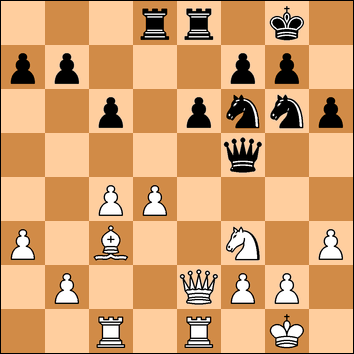
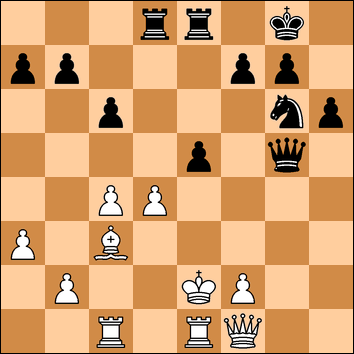
Thursday, 17 November 2016

Game 40 - Swale Club Championship 2016-17 - Round Seven

Swale Club Championship - Round Seven
Thursday 17 November 2016
White: T. Jefferies (116) - Black: K. Nevols (134)

A tough opponent - we had two games last year, the first of which I was fortunate to win (Game 13)and in the second I was well beaten (Game 26). I prepared myself for a gruelling battle - as it turned out to be. My strategy was not to enter a tactical conflict but to try to play slowly and positionally, see if I could get small advantages, and play on those in the ending.

1. e4 d5

Last year I had played the more aggressive 1. .. e5. This time, I am not taking chances and setting up my shell.

2. exd5 Qxd5
3. Nc3 Qa5
4. d4 Nf6
5. Be2

White chooses a quieter plan to the usual Bc4. His aim is to place the bishop on the long diagonal to exploit the forthcoming bishop move.

5. ....   Bf5
6. Bf3
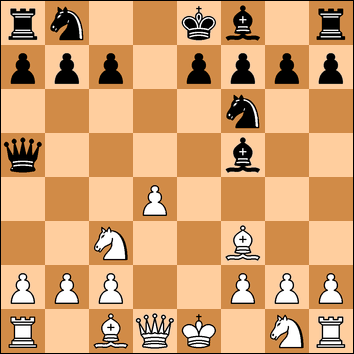


6. .....  c6

Here the computer prefers 6. .. Nc6!? The pawn to c6 is a main feature of this defence system - it solidifies the diagonal, gives the queen a route to drop back and defends the d5 square - so 6. ... Nc6 was never considered. The idea behind Nc6 is to prevent Bd2 and come to the b4 square to hit the c2 point.

After 7. Bxc6 bxc6 8. Nf3 Nd5 9. Bd2 then Black has 9. .. Nb4 10. Rc1 Nxa2 11. Ra1 Nxc3 12. Bxc3 Qd5! so 8. Bd2 Qb6 9. Bc1 Rd8!

Maybe I will give the Nc6 manoeuvre a go some time.

7. Nge2 e6

Another possibility, and idea to remember in future, is 7. .. Na6!? here, with the same idea of coming to b4. 8. Ng3 Nb4! 9. Nxf5 Qxf5 and the c2 pawn cannot be defended. (10. O-O Nxc2 11. Be4 Nxe4 12. Qxc2 Ng3!!).

8. O-O Bd6

As White has castled before I have moved the queens bishop, then playing Bb4 would have limited use - so instead I decide to prevent Bf4.

9. Ng3 Bg6
10. Re1 O-O

The king is nicely tucked away and the position is equal.

11. Nce4 Be7
12. c3

A sensible move defending the d4 point and moving off the bishop diagonal - but it surprised me. Sometimes the pawn comes to c4 - a more aggressive post but slightly weakening the pawn on d4 to which Black could consider pressure down the d-file with Rd8 etc.

12. ....  Nbd7
13. Bf4

White has a keen eye on the d6 square.

13. ....   Nd5
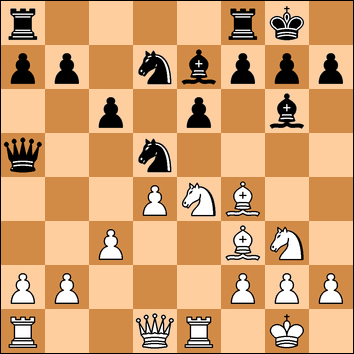


14. Bd6 Bxd6
15. Nxd6 Qc7

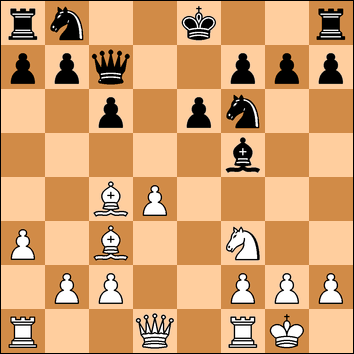
I was content with the exchange of the black squared bishops. Now I just need to expel the knight, and I can think of plans to bring the rooks in and move some pawns forward.

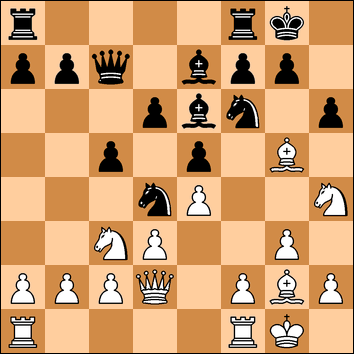
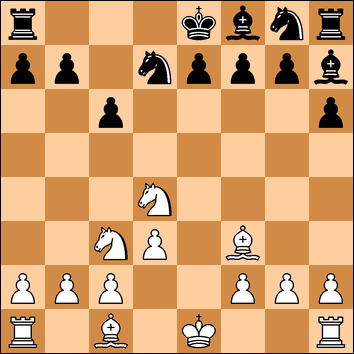
16. Bxd5?!

This surprised me. Retreating the knight to c4 or e4 may have been better. White exchanges his bishop and this gives my own white squared bishop added strength. Admittedly, with my pawns on white squares, this is only a small edge but I thought White might keep his bishop, which is well placed, and consider ideas based around c4 and d5.

I now briefly considered 16. .. Qxd6 - solely because it looked clever - but decided the bishop had to go and that I could try for some queenside initiative against the different pawn structure.

16. ....   cxd5
17. Nb5 Qb6

Now against 18. Qb3 I intended 18. .. a6 19. Na3 and then perhaps 19. .. Rac8. Instead White wants to keep the queens on.

18. Qe2 a6
19. Na3 Rac8
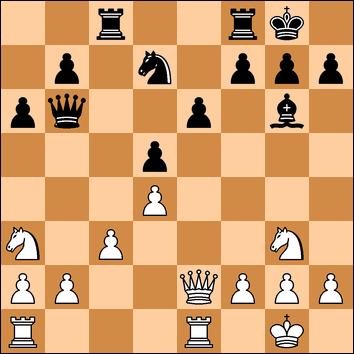


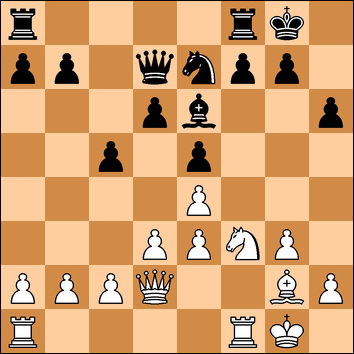
The plan! First, double up the rooks on the c-file. Second, move the queen somewhere useful. Third, advance with b5, a5, b4, and see what happens. There is not much White can do. The queen has to defend the b2 pawn, Black's centre is quite solid, and the knights have little scope.

20. Rac1 Rc6
21. Qd2 Rfc8
22. h4 h6
23. h5 Bh7

I did not mind his pawn coming to h5 - as it is just something else for White to defend.

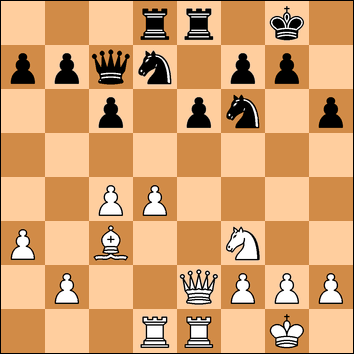
24. Qe2 Nf6

At this point I was feeling very comfortable and thought, as long as I did not blunder, I had at least  a draw in hand.

25. Nb1 Bxb1

White was pleased to see this move. The point of it is that although the bishop was controlling a number of squares, it was doing little else and is limited by my pawns in the centre. Meanwhile that knight could redeploy to d2, then f3 and finally e5 where it could prove to be a nuisance. Hence I decided to exchange it while I could.

26. Rxb1 Qc7

Preparing b5 and also thinking about attacking the h-pawn.
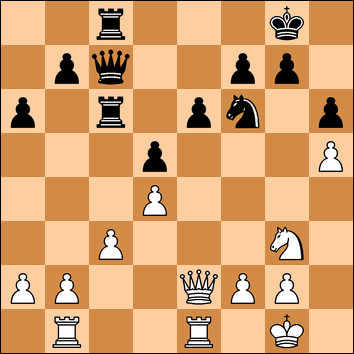


27. Qf3 Qa5
28. Ra1 Qa4
29. Qd1 Qxd1

After some thought, I decided to get the queens off. Like the bishop, I decided it had served its purpose and the absence of queens reduces any White chances of counter attacks or defences.

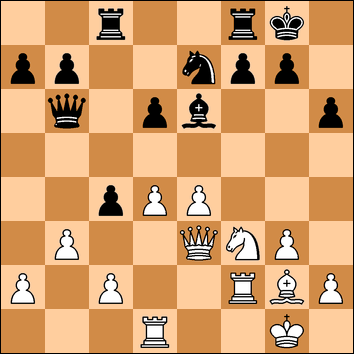
30. Raxd1

At this point, White offered a draw. The position is roughly equal but I thought Black had a very small edge. He has an initiative on the queenside and White has a weak pawn on h5. On the other hand, it is not easy for Black to break through - but deciding that, so long as I concentrated, then I could not lose, so I declined the offer.

30. ....  Kf8

The point if this move was to defend the e-file in case it opened with f4-f5. Also, long term, to get the king to the f6 square - not possible at the moment due to the rook's pin down the e-file.

31. f3

Another surprise. I had expected 31. f4. This limits the knight and prepares a king advance.

31. ....   b5

So it is now time to get on with it.

32. a3 Rc4
33. Kf2 a5
34. Re2
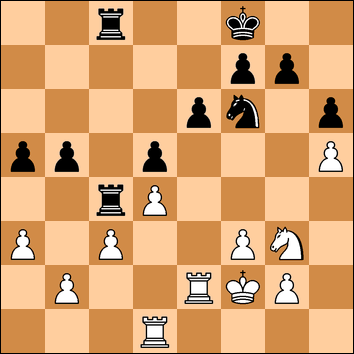


34. ..... Nd7?!

On the way to the a4 square. However, 34. ... b4 is better. 35. cxb4 axb4 36. axb4 Rxb4 37. Red2 Rcb8 38. Rb1 and then Black can choose between 38. .. Ke7 or 38. .. Rb3. Black's inaccuracy frees the white knight.

35. Nf1

Now, no longer necessary to defend the h-pawn, White has got time to bring the knight across to the defence of the queenside.

35. ....   R4c6
36. Nd2 Ke7
37. g4 Kf6

The delay in playing b4 has allowed White to improve his defences. Now White could play Nb3 and disrupt the Black initiative.

38. Kg3 b4
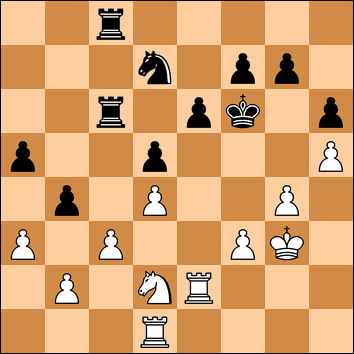


At last, but maybe too late. The white knight is better placed on d2 than it was on g3, and Black's knight is just looking on. However Black is helped by the fact that White's king has moved further away.

39. axb4 axb4
40. Nb1

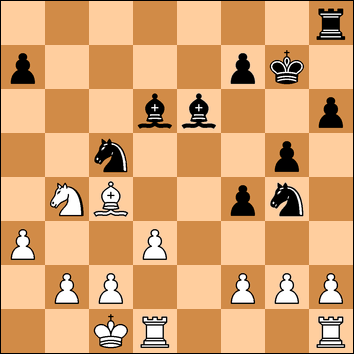
I was thinking about 40. cxb4 Rc2 but then realised that this does not threaten Rxb2 because of the tactic Ne4+. So probably 40. cxb4 Rb6. The text presumably intends to reply to 40. ... bxc3 with 41. Nxc3.

40. ....  Rb8

Now 41. cxb4 Rxb4 42. Nc3 is possible. Black could then try 42. ... Rcb6 43. Rdd2 and perhaps 43. ... Nb8 to relocate the knight to an aggressive position.

41. Rd3 Rcb6
42. cxb4 Rxb4
43. R3d2 Nb6
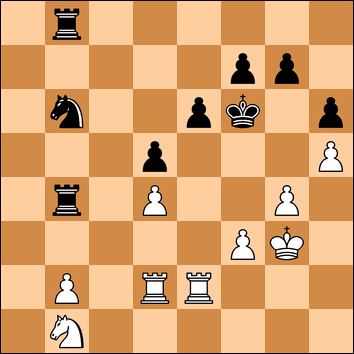


A good punch. After all the moving about, I could now see that the b-pawn was heading my way.

44. Na3 Na4
45. f4

I had to keep an eye out for any plans with Kh4, g5 and h6. Hence my rejection of 45. .. Rb3+ here.

45. ....   Rxb2

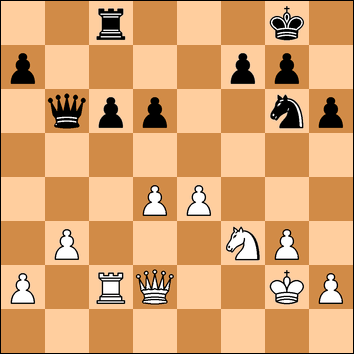
Booty gathered. Now a pawn up - the next task was to win the game.

I studied to see if exchanging all the rooks and leaving a knight ending would help. Black is better placed and the target would be the white pawn on d4 as well as the advanced pawns on the kingside. I was not sure if it was clearly won.

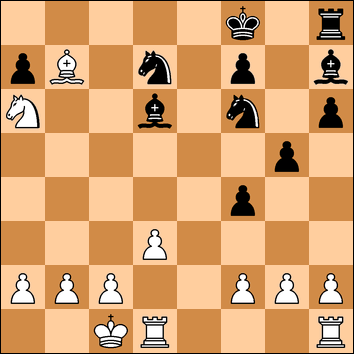
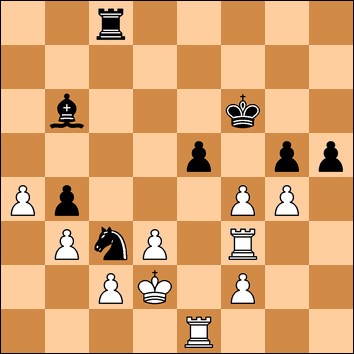
46. g5+? Ke7?

46. ... Kf5???? of course walks into 47. Re5 mate but I really cannot explain how I missed 46. .. hxg5. You spend so much effort winning a pawn on one side of the board that you miss one which is gifted to you on the other side.

Now best for White would be 47. gxh6 - splitting Black's pawns would give some counterplay chances in the ending.

But by now the game was into its fourth hour, everyone else had gone home, the room was empty, and we were both tired. With this in mind, it was perhaps inevitable that one of us would blunder and, fortunately for me, it was White who did so first.

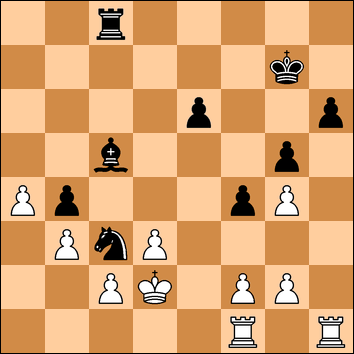
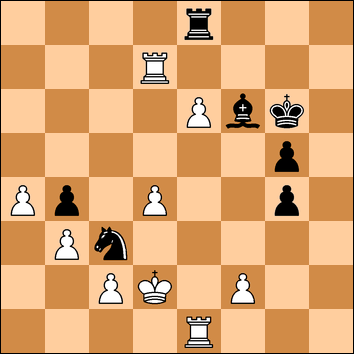
47. Nc2?? Nc3
48. Re3 Ne4+
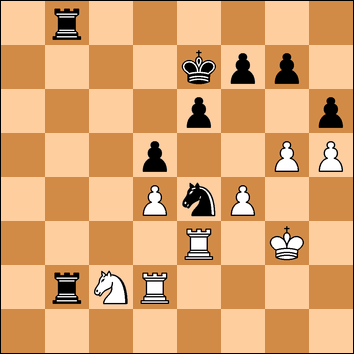


With the loss of the exchange, White decided to resign.

I was very pleased with this victory which at the time I thought was my best game so far this season. It was also my seventh unbeaten game in a row and, with five wins, one draw and one loss, put me at the top of the chess club tournament board.

Wednesday, 9 November 2016

Game 39 - club match. Maidstone v Swale

Maidstone vs Swale - Fuller Cup - Board One
Thursday 9 November 2016
White: K. Nevols (134) - Black: B. Beavis (148)

A rematch - our last encounter had resulted in a massive defeat (Game 18) and so I resolved to play calmly and solid. This time I had the white pieces.

1. e4 e6
2. Qe2

This is an off-beat response to the French. It is completely harmless for Black but avoids all the multitude of French variations. The idea is that if Black now plays 2. ... d5, as French Defence players usually do, then after 3. exd5 Black has to retake with the queen instead of the usual e-pawn.

Some games with this line move into a closed Sicilian and this is what happens here.

2. ...   c5
3. Nc3 d6
4. Nf3 Nc6
5. d3 Nf6
6. g3

Black could now consider lines involving 6. .. e5 7. Bg2 Bg4 8. h3 Nd4 9. Qd1 or 7. ... Nd4 but I think White is safe.

6. ..... Be7
7. Bg2 O-O
8. O-O Qc7

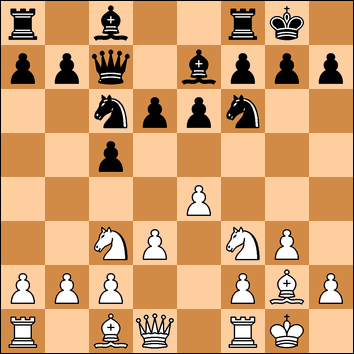
So far so good. Development continuing easily. I now had to consider where to put the queen's bishop. I figured that Black might be aiming to play d5 to open some lines for the bishops. I thought of 9. Be3 but after 9. ... Ng4 could not decide between 10. Bd2 or 10. Bf4.


Instead I decided to provoke Black to play e5 so I would not have to worry about a d5 break and then see if I could play on the kingside as well as considering the option of Bxf6 Bxf6; Nd5.

9. Bf4 e5
10. Bg5 Be6

OK, that's the end of any Nd5 ideas. Now I wanted to get the pawn to the f4 square to add pressure on the centre and start a kingside advance - so where should I put my knight? The d2 square gets in the way of the queen and bishop while on h4 there is the possibility of hopping into f5 - so over it went.

Playing the white knight to h4 is often dubious - and I think it is here.

The computer prefers 11. Qd2 to pre-empt Black's Nd4 move. It also considers 11. a4 and 11. Bxf6 as worthy of consideration.

11. Nh4?!

The time control was 35 moves in 75 minutes each and then 15 more minutes for the rest of the game. At this stage I had 52 minutes left for 24 moves while my opponent had 59.

11. ...   Nd4
12. Qd2 h6


Now here I had an almighty think - and began getting into time trouble. I could not decide between Bxf6 or Be3.

If 13. Bxf6 Bxf6 14. Nf3 then Black has 14. .. Qa5 with some pressure after 15. Nxd4 cxd4 16. Nb1 Qxd2 17. Nxd2 Rfc8 or 14. ... Nxf3 15. Bxf3 Bg5. And if 13. Bxf6 Bxf6 14. Ne2 then 14. .. Bg5 is good for Black.

But the variation I considered was 13. Bxf6 Bxf6 14. Nd5 with either 14. ... Qd8 15. Nxf6 Qxf6 16. c3 or 14. ... Bxd5 15. exd5 which after 15. .. Bg5 16. Qd1 Bxh4 and Qe7 looks ugly.

Then I had a look at 13. Be3 and how could I play against 13. .. Ng4.

On principle I decided to keep the bishops on - which rather made the whole exercise a waste of time and effort.

13. Be3

Now Black could consider 13. ... g5 14. Nf3 Bg4 with pressure. (15. Bxd4 cxd4 16. Nd5 Nxd5 17. exd5 Rac8).

13. ....    Ng4
14. Nf3

I now had 25 minutes left for 21 moves. The time limit was the usual 35 moves in 75 minutes and then 15 minutes for the rest of the game.

14. ....    Nxe3
15. fxe3 Nc6

I think 15. ... Nxf3 16. Bxf3 would have been fine for White, easing some of the pressure - although I would keep an eye on any Bg5 ideas. Some plans based around d4 would have been considered.

With the knight's retreat, I breathed a sigh of relief and now saw I could get some initiative in the centre.

16. Nd5 Qd7

If 16. ... Bxd5 17. exd5 Nb4 then 18. e4 secures the centre and gives me time for ideas around c3 and d4 with perhaps Rac1 in there somewhere.

17. Nxe7+ Nxe7


Now 18. b4!? is interesting - exploiting the decision to retake on e7 with the knight. If 18. .. cxb4 19. Qxb4 Rfc8 20. c4, or 19. .... Nc6 20. Qb5 and White is having fun again.

Black is better at the moment due to his better placed pieces. White's bishop on g2 is miserable and Black could think about ideas of a pawn break with either d5 or f5.

I gave thought here to 18. Nh4 hoping to provoke 18. .. Ng6 when I could play 19. Nf5. However, 18. .. g5 is simple enough.

Instead I decided to try to open the centre to give some space to my pieces.

18. d4! Bc4

I was not displeased to see this, as it forces me to free the f1 square where I might be able to move the bishop and either swap or gain some activity.

An interesting exchange sacrifice would be 19. dxc5!? Bxf1 20. Rxf1. White would get two pawns for the exchange. There are some good variations here - but nothing conclusive - and, being very short of time, I would not have gone for it even if I had seen it.

19. Rf2 Qc7?

A mistake from Black - 19. ... exd4 would have been better. Now White should have played 20. dxe5 dxe5 21. Qc3 winning a pawn.

20. b3?

..... But I did not see it and just wanted the bishop out of there.

20. ....   Be6
21. Qc3 exd4
22. exd4 Rac8
23. Rd1

Planning to meet 23. cxd4 with 24. Qxd4 and Black has a weak pawn on d6. Now I had 12 minutes left for 12 moves.

23.  ...  c4
24. Qe3

An idea is 24. d5 but I do not want to open the black squared diagonal towards my king.

24. ...   Qb6


25. Nd2

Seven minutes left for ten moves.

25. ......  cxb3
26. cxb3

I was worried about 26. .. Rc2 but then 27. Nc4 wins the exchange.

26. ...  Bg4
27. Bf3 Bxf3

My white bishop, which had done nothing all game, is exchanged for his very busy and active bishop. That was a very good bargain.

28. Nxf3 Qb4

I began to feel more comfortable and my only worry was the clock. If I could make the time control without blundering, I thought I could keep a drawn position.

29. Rc1 Rc6
30. Rxc6

Forced. I could not wait for the other rook to come to c8. Three minutes left for five moves.

30.  ....  bxc6

Probably better than 30. ... Nxc6 31. d5.

31. Rc2 Qb6
32. Qc3 Rc8

With just under two minutes to go, my priority was to get to move 35.

33. Qd3 Ng6
34. Kg2

So as not to worry about plans about Ne5 exploiting the diagonal pin to the king.

34. ....   Qa5
35. Qd2 Qb6


Made it! As Black moved the queen back to b6, he offered the draw to which I accepted.

On the face of it, not a very exciting game where both sides played very carefully and solidly - but Black had the edge throughout in activity although nothing conclusive.

In the final position, White might have a slight advantage and could play 36. Rc4 next but after a tiring game, I was happy to accept a draw with a higher graded player who had comprehensively beaten me last time.

Maidstone v Swale

Barrington Beavis (148) 1/2-1/2 Keith Nevols (134)
Peter Dirmauskas (99) 1-0 Tyrone Jefferies (116)
Nigel Osina (98) 1/2-1/2 Andrew Gillard (113)
Rebecca Rutter 0-1 Anthony Fletcher (74)

Maidstone 2-2 Swale

Thursday, 3 November 2016

Game 38 - Swale Club Championship 2016-17 - Round Six

Swale Club Championship - Round Six
Thursday 3 November 2016
White: K. Nevols (134) - Black: I. Lappin (125)

My opponent was someone you could not prepare for - he has a wide range of opening set-ups and tactics. I had a very difficult game last year and prepared myself for another tough battle.

1. e4 d5

Now here's a funny thing. I face the opening I have made into my own defence!

2. exd5 Qxd5
3. Nc3 Qe6+

Unusual. I play Qa5, while Qd6, Qe5+ and Qd8 are all sometimes seen. Now 4. Be2 could be met by the annoying 4. .. Qg6. Perhaps 4. Nge2 is best. All the same, I decide to let the queens go early.

4. Qe2 Qxe2+
5. Bxe2 Bf5

Already time for the thinking cap. White should now play 6. Nd5 and after 6. .. Kd8 7. Ne3 Bg6 8. Nf3 is developing nicely.

6. d3

But this is not so good for the simple reason that it holds up the kingside development.

6. ...  c6
7. Nf3 h6
8. Nd4 Bh7

Now I have in mind whether I can play any tactics on the queenside with moves around Bf3 and Nb5.

9. Bf3 Nd7


White should now either castle or play Be3 keeping an edge. Instead here comes the first blunder of the game. I still had in mind plans around Nb5 and decided to develop my bishop towards the c7 square - and completely overlooking a fork.

10. Bf4?? e5

Simple when you see it - highly annoying when you don't. Grumbling silently, I tried to see how I could get something for the piece. I considered 11. Ncb5? cxb5 12. Nxb5 but 12. .. Kd8 or better 12. .. Rc8 keeps Black well ahead.

I looked at castling and, after pawn takes something, then Re1+ but there's nothing there - simply Be7.

Finally I thought I might tempt him into a mistake and get two pawns for the piece.

11. Nxc6

If now 11. .. bxc6 12. bxc6 Rc8 13. Bxd7+ Kxd7 14. Be3 (14. Bxe5?? Re8 with f6 to follow) and I would have two pawns for the piece with a beady eye on the a7 pawn and a Black king in the centre with an undeveloped kingside. I would have to throw the kitchen sink to get a swindle out of that.

Black chooses the other capture.

11. ...  exf4
12. Na5

My original plan was 12. .. Rb8 and something takes on b7. However if 13. Nxb7 then 13. .. Ne5 is good (14. Bd5 Nf6) and if 13. Bxb7 then 13. .. Bb4! So after 12. .. Rb8 White has to castle queenside and Black can then continue developing with 13. .. Be7 and Ngf6 - the pawn on b7 is still poisonous.

12. ...  Bb4

My first piece of luck - he does not find 12. .. Rb8 and the second pawn goes.

13. Nxb7 Rb8
14. O-O-O

OK, now the b2 point is defended and I can get a rook onto the e-file.

14. ...   g5!?

I did not expect this. The point is to threaten 15. .. g4 and remove a square from the bishop - but I think 14. .. Ngf6 is better.

15. Nb5

I have my eye on the c7 square for a check and also thinking of c3 and Re1 check.

15. ...   Ngf6

Black shows no fear!! But I win the exchange.

16. Nc7+ Kf8
17. Na6 Rxb7
18. Bxb7 Bd6


OK, I say to myself, I am back in the game. I have a rook and two pawns versus a knight and bishop. But his pieces are very active and he can bring the rook into the game with Kg7. My first task must be to get those pieces stuck on the left hand side back into the centre - starting with the knight which is dominated by the bishop.

19. a3 Bf5
20. Nb4 Nc5
21. Bc6 Be6
22. Bb5 Kg7
23. Bc4 Ng4


Black has played the last few moves very well - his four minor pieces are becoming very active while I am keen to ease the pressure by swapping off a bishop.

Now I gave some thought to 24. Bxe6 Nxf2 25. Bc4 Nxh1 26. Rxh1 which results in an ending in which I am a pawn up. But better for Black would be the simple 24. ... Nxe6.

I also considered 24. f3? Nf2 25. Bxe6 but then again simply 25. .. Nxe6 and my rooks remain forked.

I instead decided I had to grovel and defend the f-pawn. However 24. Bxe6 is a better move.

24. Rdf1 Rc8

A good square for the rook but allowing me to exchange a bishop. The computer likes 24. .. f3 forcing 25. g3.

25. Bxe6 fxe6
26. h3

Another sigh of relief at being able to get the knight away. I now expected 26. .. Ne5 (which threatens Bxb4 and Nxd3) after which I would play 27. Kd2.

An interesting move for Black would be 26. .. f3!? with 27. gxf3 Ne5 which gives a wonderful square on f4 for a Black knight or bishop.

26.   ...  a5

But this keeps up the pressure. Moving the knight allows Nxd3 (or even Nxf2 and then Nd3) whereas 27. hxg4 axb4 28. axb4 Nd3+ 29. Kd2 Nxb4 and Black has won a pawn.

27. Kd2 Na4?

At last Black makes a mistake. 27. .. Nxf2 28. Rxf2 axb4 29. axb4 Na4 keeps Black's advantage and ties White down to a difficult defence. But now I could see a way I might get put a defence together.

28. hxg4 axb4
29. b3 Nc3
30. a4

Now I must remember the possibility of running with that a-pawn.

30. ....   Bc5

Tying down the rook on f1. So I have a big think and cobble together some kind of counterplay. I need to release the rooks and decide the f2 pawn is better defended from f3 so I could think about a plan involving g3 - but self-trapping the rook on f3 is quite brave.


31. Rh3 Bb6
32. Rf3 e5
33. Re1

However, now 33. ... h5! rolls up the kingside. The forced line goes 34. Rxe5 Kf6 35. Rf5+ Kg6 36. Re5 hxg4 37. Re6+ Kf7 38. Rxb6 and then Black might spot 38. ...   Nc1+!! 39. Kc1 Na3 40. c4 bxc3 41. Rxf4+ gxf4. Still, a tough one to play.

33. .....   Kf6

But nothing wrong with playing simple defence.

34. g3 h5

Playing 34. ... Bd4 is also simple and strong.

Throughout these moves I had to keep my rook on the back rank as I was concerned about the manoeuvre Nb1+ and Nc3.

35. gxf4


Now Black should play 35. .. exf4 and then 36. gxh5 Kf5! with the threat of g4, forcing 37. Rh3 Bxf2. With the two passed pawns and the bishop coming to e3, White could consider resigning.

35.  ....   hxg4?

Glory be!! A mistake.

36. fxe5+

Black had overlooked that this was double check - and that he would have no time to take the rook.

36. ....    Kg7
37. Rf5 Bd8

Now 38. Rg1 is best to pick up the pawns but I was still worried about the knight so instead I thought I get play by advancing the pawn.

38. e6 Bf6

Now Black threatens Nxa4 and Bc3+.

39. Ra5

With the idea of defending against this threat and infiltrating to the seventh rank.

39. ...   Rd8
40. Ra7+ Kg6
41. Rd7 Re8
42. d4


I was full of confidence now and thought if I could get a pawn to d5 then the win is there. But Black could now play 42. ... Kf5! 43. d5 Ne4+ and suddenly it is still in balance. 42. a5 might have been better.

42. ....   Bg7
43. Kd3

Another reason why I wanted to play d4 was to get some room for the King. Black should now return the bishop to f6 - 43. .. Bf6 - to cover the e7 square. Then he could consider playing Kf5. After 43. .. Bf6 44. d5 Kf5 White has a choice of 45. a5 or 45. e7 - I would probably have preferred the former.

Fortunately (for me) Black makes the last mistake - and forgot he had moved the bishop.

43. ....   Kf5??
44. Rxg7

Black now resigned.

A dramatic and exhausting game where I was forever just trying to survive after my blunder on move 10. Until Black's 35th move, I was behind and even then nothing was clear. Yet again a game I probably did not deserve to win - but then I would argue that, with the fight I put up, I perhaps did not deserve to lose either.

Saturday, 29 October 2016

Game 37 - County U-140 League - Kent vs Essex

Kent vs Essex - Board Six
Saturday 29 October 2016
White: K.Nevols (134) - Black: C.Siddo (134)

This was my first appearance for the Kent Under-140 county team. The game took place at the Mick Jagger Centre in Dartford. Next door were a group of children doing some sort of Halloween dance practice which meant all sorts of music came thumping through the walls.

I was initially concerned about this but actually found it relaxing. Jigging one's feet to 'Op, op, oppa Gangnam Style' while concentrating is quite therapeutic. Maybe disco chess is a creation waiting to happen.

The time limit is much more generous than I was used to. 35 moves in 105 minutes each and then half an hour for the rest of the game - so the whole game would be no more than four and half hours.

1. e4 d6
2. d4 Nf6

The Pirc Defence. Not an opening I know well yet I often seem to face.

3. Nc3 c6
4. Nf3 Bg4
5. h3 Bh5

The idea behind the early h3 was to deflect the bishop off the diagonal - and the move is often useful after castling anyway.

6. Be2 h6!?

If Black is playing the Pirc then he usually wants to put his bishop on the g7 square. I thought this move looked a bit loosening.

Now 7. e5 could deserve some consideration. A possible line being 7. .. dxe5 8. dxe5 Qxd1+ 9. Nxd1 Nd5 10. c4 or 10. Ne3 getting some initiative. However I am a cautious player and like to ensure the king is safe before I open the centre.

7. O-O e6

Perhaps the result of his last move. Black needs to put the kings' bishop somewhere and while g6 and Bg7 are still, in the long run possible, he decides it would be quicker to go to e7. The problem is that it gives this rather odd trio of pawns in his centre.


I now had a long thought of about twenty minutes. I have an advantage in development and wanted to see if I could make an early attack while Black still has some way to go. I considered 8. e5 dxe5 9. dxe5 Qxd1+ 10. Rxd1 but after 10. .. Nd7 or Nd5 could not see anything.

Black could at some stage play d5 to secure his centre and open the diagonal for the bishop. So I decided to preempt that and play the active move to try to open lines towards his uncastled king.

8. d5!

Now if 8. .. exd5 9. exd5 Nxd5 10. Nxd5 cxd5 11. Qxd5 (or a different order of exchanges but with the same result) then White has Re1 coming and Black has a weak pawn on d6 blocking in his bishop.

If Black continues development with 8. .. Nbd7 then 9. dxe6 fxe6 seemed to be OK.

Instead Black decides to close the centre.

8. ...  e5
9. Nd2

Playing 9. Be3 might have been better. With my pawns on white squares it made sense to exchange the white squared bishop.

9. ...  Bg6

I now rejected 10. f4 because after 10. .. exf4 11. Rxf4 I did not like the position of the rook nor the weak squares around the king. The computer now recommends 10. Bd3 but I do not like 10. .. cxd5 11. exd5 Bxd3 12. cxd3 although White now has the e4 square for his knight and Black is still behind in development.

Instead I decided to secure the centre and move the knight round to the e3 square.

10. Bf3 Be7
11. Re1 O-O
12. Nc4?

A bad mistake. If I wanted to play the knight to the e3 square then Nf1 would have been a better route. I now allow Black a sharp initiative.

12. .  ....b5

Of course.

13. Nd2

Playing 13. Ne3 as per the original plan now results in 13. ... b4 winning a pawn.

13. ...  b4
14. Nb1 cxd5
15. exd5 Qc7


And now things are looking a lot more gloomy. I have a pawn stuck alone on d5, most of my pieces stuck back on the first two ranks, while Black's bishop on g6 has come to life, his pawn on b4 does a good job of restricting White's queenside and he has pressure coming down the c-file. The tide is clearly in Black's favour.

I felt 16. c3 a5 did not get anywhere and so I decide to move forwards again to block the bishop diagonal.

16. Ne4 Nxe4

Developing with 16. .. Nbd7 might have been better.

17. Bxe4 f5
18. Bf3 Na6

Black brings his knight the other way but I think this is slightly inaccurate. 18. ...a5 would have kept the pressure on with Na6 behind the a-pawn or Nbd7. As played, I now get the chance to exchange off the restrictive pawn on b4.

19. a3 bxa3
20. Nxa3

Now I was a little more content. The knight on a3 defends the c2 point well, Black has an isolated a-pawn and my pieces are beginning to find some activity. However the d-pawn was still concerning me, as was Black's central pawns.

20. ...   Qb7

The computer does not like this move which it states gives away Black's advantage. It prefers an idea of playing f4 and then Be8. To me, this move was to stop White moving the queen's bishop.

21. Rb1

This is to allow the queen's bishop to move. However 21. Nc4! is better, seizing the initiative, with the intention being to come to a5 and then possibly c6.

Black could now play 21. .. Nb4 to threaten e4 winning a pawn. Then 22. c4 e4 23. Be2 f4 and Black is on the march again. The knight is quite OK on the b4 square and will await the opportunity to jump it d3. (24. Nc2 e3!). Fortunately Black's knight chooses a less secure square.

21. .      Nc5
22. b4 Na4
23. Rb3 Nb6


The knight's journey has resulted in the threat to the d-pawn forcing the next move. On the plus side, my rook had been forced to move to a square where it could consider moving across to the kingside.

24. c4

At the board I was now concerned about 24. .. Be8 with the intention of Ba4. However White can get back on the attack with 25. c5! But I cannot guarantee I would have seen this move.

24. . ..   e4
25. Bh5

I played this because of my concern noted earlier. I did not want the black bishop to reach the a4 square and so decided to swap it off to ease some pressure on the centre and see if I could make anything of those white squares in front of his king.

25. . ....  Bxh5

To my surprise, my opponent offered a draw. I say I was surprised because I had spent the last hour under the cosh trying to grovel out of the mistake made earlier with Nc4 and my mind had been set on survival. The computer rates the position now as '0' - dead level.

But I turned it down! Why? Did I think I was better? No, I certainly did not. Black still has the potential for operations on the queenside. The answer is that I was not ready yet to go home. I wanted to play on and see what happened.

26. Qxh5 Rf6

To defend against the threat of Bxh6. I now gave a lot of thought to 27. Rg3 renewing the threat to h6. If then 27. .. Kh8 then 28. Bb2 is strong. Black can counter attack with 27. ... Rf7 28. Bxh6 Rc8! 29. Rc1 f4 30. Rg6 Nxd5.

I could not see anything definite after this move and decided on the other way to attack.

27. Bb2 Rf7
28. f3

This is the best move but as soon as I played it I was regretting it. It makes perfect sense to open up the centre and bring the other rook into the attack but after 28. .. exf3 29. Qxf3 my hopes of an attack have gone again and I have too many pieces stuck over on the left hand side.

At the time, I thought I should be moving the knight into the middle with beautiful squares for it to sit on - such as c6, e6 and possibly f5 - so the d4 square is where it must go.

28. ...   Nd7

Black re-routes the knight. Now the threat is Nc5 with the wonderful square d3 in sight. And Nf6 might also be a useful defensive move. The best way to meet this threat is with 29. Bd4 when Black might then consider 29. .. Bf6.

29. Nb5?

Mistake! Black can now counter attack against the c-pawn with 29. .. Rc8 30. Rc1 Nb6 31. Na3 Bg5 32. Rc2 Qa6 and White is all of a jumble once again.

29. ....  a6?

Fortunately Black makes a mistake in return forcing the White knight to go where it was intending to go anyway.

30. Nd4

A lovely square for a knight and I was feeling happier with the world. How is Black going to defend the pawn on f5? I expected 30. . exf3 when I had to choose between 31. Nxf3 Nf6 (of 31. .. Nb6), 31. Qxf3 Ne5 or 31. gxf3 which just looked ugly.

30. ...  Ne5

Not no. Black too gains an impressive knight in the centre. I decided to exchange my c-pawn for his e-pawn.


31. fxe4 Nxc4?!

With a second draw offer - but giving up a pawn. Better would have been 31. .. fxe4 32. Rxe4 Nxc4 and maybe then offering a draw. (33. Nf5 Nxb2 34. Rxb2 Bf6 and then defending the d-pawn - if White is in the mood for some fun, he could try 33. Nf5 Nxb2 34. Qxf7+!? Kxf7 35. Rxe7+ Qxe7 36. Nxe7 Kxe7 37. Rxb2 with a rook and four pawns ending. 37. .. Rb8 38. Re2+! Kd7 39. Re4 should hold the draw).

I decided to decline this second draw offer - again not because I could see a win, but because I wanted to see if I could make anything of the extra pawn.

32. Nxf5 Nxb2
33. Nxe7+?!

I figured that removing his bishop would weaken his defence - the problem is it also weakens my attack. That knight was doing very well on f5.

33. ...   Qxe7
34. Rxb2 Rf4

Black now whips up some strong pressure on the centre.

35. Qe2 Qe5
36. Rb3 Qd4+

White should now play 37. Kh2 tucking the king away. Then perhaps 37. .. Rf2 38. Qe3 Qxe3 39. Rexe3 Rb8 and a draw is the most likely result.


37. Qe3?

And White blunders - from a pawn up to a pawn down.

37. ...   Rxe4

I simply did not see this move. The d-pawn is doomed and I am now fighting for the draw.

38. Qxd4 Rxd4

In a state of shock, I picked up my rook from the e1 square and placed it on to e6 - for some reason, I had thought after Black plays Rxd5 I could then play Rxd6. Without letting go, I immediately saw my mistake, and lifted the rook back up again with the intention of putting it back - but I had forgotten where I had picked it up from.

I hovered, waving the rook in the air, and finally saw how I might be able to draw - by placing both rooks on the seventh rank with the plan of harassing his king.

39. Re7 Rxd5
40. Rc3

The intention is 40. Rcc7. Black now gave a lot of thought ... 

40. ....    Rb8

 .... and offered the draw a third time. This time I gladly accepted to end an eventful game.


Black still has the advantage, and could not lose, so perhaps should have played on. 41. Rcc7 Rg5! 42. Ra7 Rxb4 43. Rxa6 Rb1+ 44. Kf2 Rb2+ will pick up the g-pawn after 45. Rxd6 Rgxg2. You could not say that Black has a win but it would have been hard work for White to hold.

My run of three wins had come to an end - but my roller coaster unbeaten run was continuing.

Thursday, 27 October 2016

Game 36 - club match. Swale vs Medway

Swale vs Medway - Fuller Cup - Board One
Thursday 27 October 2016
White: P. Foster (126) - Black: K. Nevols (134)

First match of the season.

1. e4 d5
2. exd5 Qxd5
3. Nc3 Qa5
4. d4 Nf6

The main line for the Qa5 Scandinavian.

5. Bd2

Normally here I play 5. .. c6 but I decided to try something different. Sometimes 5. .. c6 leads to 6. Ne4 Qc7 7. Nxf6 exf6 which is OK but does not secure the d5 square like the opening usually does with pawns on c6 and e6. I asked myself, do I really need to play this so early?

5. ....   Bf5

So instead I continued with development. My intention now after 6. Ne4 was to play 6. ... Qb6 and then 7. Nxf6 Qxf6. Next could be 8. Nf3 e6 9. Bg5 Qg6 or 8. Nf3 Qb6 9. Bc3 e6. The queen moves waste time but Black could stay solid. I might try this out some time.

6. Nf3

Instead White keeps the option of the discovered attack.

6. ....  c6

I decided I had tempted fate too much and that I would note the above for a later study. If 6. .. e4 7. Ne4 Qb6 8. Nxf6+ gxf6 9. Bc3 the computer recommends 9. .. Nc6 with castling queen side.

7. Bc4 e6
8. O-O Bb4
9. a3 Bxc3
10. Bxc3 Qc7


Now we are back into a familiar position. White has the edge with 11. Ne5 and the two bishops.

11. Re1

Some time ago I looked at lines where White plays d5 before Black has castled and thus the e-pawn is pinned. But I've got to castle some time.

11. .   O-O
12. Nh4 Bg4?!

Playing 12. .. Bg6 might be better. After the text, White now has the option of 13. f3 Bh5 14. g4 Bg6 15. Nxg6 hxg6 16. Qd2! with the possibility of Bb4 or Ba5 working up an initiative while Black's queen's knight is still not yet developed.

13. Be2

Instead White undevelops the bishop which gives up some of his advantage.

13. ...   Bxe2
14. Qxe2 Nbd7

Now the position is completely equal.

15. Nf3 Nd5
16. Bd2 h6

I was a bit worried about Ng5 and everything piling up on the e6-point so decide to pre-empt this.

17. c4

Black often encourages this move because now the d4 pawn is undefended and can be attacked by a pile-up of rooks on the d-file followed by a c5 move.

17. ....  N5f6
18. Bc3 Rad8
19. Rad1 Rfe8

Securing the centre and considering operations elsewhere. White could consider playing 20. Ne5 - nothing is immediately threatened but the knight looks good there.


20. h3 Qb6

Glancing towards the queenside - however I wonder if 20. .. Qf4 is worth a thought to activate and possibly exchange the queen. 21. Bd2 Qf5 22. Nh4 Qc2 23. Bb4 Qxe2 24. Rxe2 Nb6 is one line.

21. Qd2 Qb3

Noticing the loose c-pawn and deciding to be annoying. Now if 22. Qd3 then I quite liked 22. .. Nc5.

22. Qe2 Nf8

Clearing the d-file and planning to come to g6. Although if White now plays 23. Ne5 Black does not have much better than putting either knight back on the d7 square.

At this stage, I was struggling to see now I could get an advantage.

23. Nd2

But this surprised me. White has consistently avoided playing Ne5 and now decides to rotate the knight round to the e4 square expelling the queen at the same time. However I decide to take the opportunity to either exchange queens or move the queen over to the kingside.

23. .... Qc2

If now 24. Nf3 then 24. .. Qxe2 25. Rxe2 Ng6. White will have to play 26. g3 and I could try 26.... Rd7. Then if 27. Ne5 Nxe5 28. Rxe5 Red8. Still equal but thinking of plans around a c5 move or Nh7-g5.

24. Rc1

White avoids the exchange and allows me to place the queen in a more active position.

24. ...   Qf5
25. Nf3 Ng6


I now went off to get a drink and came back for a serious ponder. I immediately saw White could not play 26. g4 and tried to think how I could build up an attack against the king. Could I play Nf4? Would h5-h4 be any good? Can I somehow get the rooks over? Is Kh8 with Rg8 and g5-g4 as daft as it looks?

White's best here is the solid 26. Qe3. If 26. .. Nf4 (with the threat of Nd3) then 27. Nh4 would be a mistake (27. .. Qg5 28. Qg3 Qxg3 29. fxg3 Nd3 or 28. g3 Nxh3+ 29. Kg2 Qxe3. 28. Nf3?? is an early nighter with 28. ... Qg2 mate). So after 26. ... Nf4 then the belated 27. Ne5 is the better option - defending the d3 square. Black may well then play 27. .. Ng6 and offer the draw.

While I was satisfied that I would be unlikely to lose from here, I was still struggling to see how I could get the advantage and unbalance things. My thoughts were interrupted when he played the move I had already ruled out.

26. g4?

Simply loses a pawn.

26. ...   Nxg4

Now White would be well advised to say 'oops' and play 27. Qe4 to exchange the queens. Black would then have to prove he could win with the extra pawn.

27. hxg4?

Instead another pawn goes - and although my knight has gone, I could see how I could get it back.

27. ...  Qxg4+
28. Kh1 Nf4

This is what White has overlooked. Black threatens the queen and also Qg2 mate. If 29. Rg1 then simply Qh3+ picking up the queen next go. To defend against the threat, White has to let the knight go and become reconciled to the fact that he is two pawns down.

29. Qf1 Qxf3+
30. Kh2

I now tried hard to see if I could finish the game immediately - and simply did not see 30 .. Nd3 forking the rooks which may well have forced resignation. (If 31. Re3 then 31. ... Qf4+. Had White played 30. Kg1 then the Nd3 option would not have been possible due to 31. Re3 Qg4+ 32. Rg3).

30.  ... Qh5+?!

However I am two pawns up and now my thoughts are to consolidate that lead by exchanging pieces. I also had to beware of a possible attack by his pieces along the open g- and h-files. I settled down for what I thought would be a lengthy process to get over the line.

31. Kg3 Qg5+
32. Kf3 Ng6

Withdrawing the knight to safety and adding to the defence. I could see he was intending to run his king over to the queenside.

33. Ke2 e5!


Opening lines while his king is in the centre. 34. exd5 Nxd5 threatens a killer discovered check while 34. .. Rxd5 is even better with 35. Bxe5 Rd2+ 36. Kf3 Nh4+ 37. Ke4 f5 mate.

34. Kd1 exd4

Now three pawns up.

35. Rxe8+ Rxe8
36. Bd2

Obviously 36. Bxd4 walks into 36. .. Qg4+.

36. . ..Qf5

Although White's king is now safe, Black is three pawns up and White decided to resign.

I was quite pleased with this win - my rather dull defence placed me in no danger, always with a draw in hand, and providing White with a temptation he was not able to refuse.

Swale v Medway

Keith Nevols (134) 1-0 Paul Foster (126)
Ian Lappin (125) 1-0 Alan Evans (87)
Karl Lewis 1-0 (90) 1-0 Isaac Oluwole (87)
Ted Vidyartmi (60) 0-1 Barry Hampton (83)

Swale 3-1 Medway

Thursday, 20 October 2016

Game 35 - Swale Club Championship 2016-17 - Round Five

Swale Club Championship 2016-17 - Round Five
Thursday 20 October 2016
White: B. Sawyer (83) - Black: K. Nevols (134)

1. e4 e5
2. Nf3 Nc6
3. Bc4

The Italian Game, or Guioco Piano, which I defend using the Two Knights defence.

3. ....  Nf6
4. d3 Be7

4. .. d5 is considered to be best here but I am not confident with that. I just want to get the king castled.

5. a3

Don't quite understand this.

5. ..   O-O
6. O-O

Now I gave some thought to 6. .. d5. As I said, I am not confident opening up the centre in this sort of position, but with my king castled, the centre more defended, and the absence of a white knight on c3, it was quite tempting. 7. exd5 Nxd5 8. Re1 was my main concern. 8. .. Bf6 9. Qe2 Qd6 did not look quite right. White could follow up with 10. Bxd5 Qxd5 11. Nc3.

I also gave thought to 6. .. Re8 but this just seemed to waste time.

Post-match analysis reveals this is fine for Black and that 6. .. d5 is perfectly playable. But I decided to stay solid.

6. ....   d6
7. h3

Limiting the scope of the queens bishop. Now I decide it is time to think of a plan. 7. .. Be6 equalises. Instead I decide to advance on the kingside and so need to free and then unpin the f-pawn to do so.

7. ...  Ne8
8. Nc3 Kh8
9. b4 a6
10. Ne2


White decides to redeploy the knight to the defence - in effect forcing Black to get on with it. But this is in error as Black now gains the space and initiative. Continuing development with 10. Be3 might have been wiser.

10 ...  f5
11. Ng3 f4
12. Ne2 Nf6
13. Nc3 Qe8

White has spent four moves moving one knight back to where it was originally. With the gain in tempi, my plan is now to advance the attack against White's king.

14. d4 Qh5
15. d5

At the time I did not like this move for White which closes down the centre, blocks the bishop, and gives Black a free hand to advance. However it is the choice of the computer who then plans to advance on the queenside with a4, a5 and b5.

15. ...   Nd8

Not a good square but the intention is to bring it to f7 and then g5.

16. Be2 Qe8

Now it is my turn to waste time. I considered 16. ... Qg6 but after 17. Nh4 I could not see anything. (17. .. Qg5 18. Nf3).

17. Kh2 Nf7

So back to the knight - maybe it will have more luck.


18. Rh1!?

An odd move which was a complete surprise. Maybe 18. g3 is better to challenge Black's advanced pawns. With my last game in mind, I wondered if the plan was to advance the h-pawn at some stage. In fact, it dissuaded me from any thoughts of playing g5-g4.

18. ....   Bd7

After a long think, I decided I could not see any way to progress on the kingside and turned my thoughts the other way.

19. Kg1

The drawback with White's plan is that now the rook is entombed. With White struggling with development, I decided the time would be right to open things up a little.

19. ...  c6
20. Nd2 cxd5

The first capture of the game takes place on move 20.

21. Nxd5 Nxd5
22. exd5 Rc8

Grabbing the half open file.

23. c4 Bf5

With my pieces now moving to good squares, I was feeling comfortable with the position.


24. Bg4 Qd7

I did not want to take the bishop and open the h-file - again with my last game in mind. I also wanted to keep his rook trapped in the corner and not allow it some freedom by advancing to h3 (for example) and move across to the queenside. However, 24. .. Bxg4 25. hxg4 Nh6 forces 26. f3. But then White can get counterplay with Ne4 and ideas based around a c5 advance.

25. Qe2 Rfe8

To strengthen the e-file defence against a c5 advance.

26. Bb2 Nh6

Putting the question to White. Also my knight was looking at those black squares on e3 and d4 and seeing if it could move to f5 to pressure them.

27. Bh5 Rf8

Instinct told me to dislike 27. .. g6.

28. Rc1 Bf6
29. Ne4 g6

And instinct changed its mind. With my pawns on black squares, it made sense to exchange the black squared bishop.

30. Nxf6 Rxf6
31. Bf3 Qe7
32. Be4 Kg8

To get off the b2 diagonal.

33. f3 Bxe4
34. Qxe4?!


A small mistake. 34. fxe4 solidifies the centre and keeps the knight at bay. Not sure what I would do then while White could start thinking about a queenside offensive.

34. ...  Nf5
35. Qe1 Ne3

A wonderful square for the horse and White is under pressure. I now expected 36. Qe2 when I was looking at ideas around 36. ... Nf5 or trying to get the queen on to the a7-g1 diagonal.

36. g3

Instead White sacrifices a pawn.

36. .. Rxc4

Taking with the knight may have been better but I was worried about getting pinned down the c-fie.

37. Rxc4 Nxc4
38. Bc1


And now 38. .. Qf7 which attacks the d5 pawn and strengthens the f-file pressure is best. Then 39. Qe4 Nb6 40. gxf4 Nxd5. Instead I was focusing on 38. ... fxg3 39. Qxg3 but ...

38 ...    fxg3??

 .... is a blunder because of ....

39. Bg5

Thud!! From a comfortable position, Black is now fighting to save the draw. I simply did not see this move. Grumbling darkly, I had a long ponder. I'm now going to lose the exchange but, after Qxg3 Nxa3, I will have two pawns for it. He will have weak pawns on h3, f3 and d5. If I can get my queen and knight to buzz around his king, I might be able to force a draw.

Incidentally, the computer rates this position as '-0.56' - it still thinks Black is winning!

39 .     Qf7
40. Bxf6 Qxf6
41. Qxg3 Nxa3

I did not consider anything else - but 41. .. Qf7 is an alternative as the d-pawn can't be protected and I get a passed pawn.

42. Kg2?

Better is 42. Kf2 as this walks into a fork.

42. ....  Nc2
43. Rc1 Ne3+
44. Kh1 Nxd5


OK, so now I have three pawns for the exchange. The question is - can I hold this position without queens? I decided I could not - I need to attack his weak pawns at the risk of allowing him a combined attack.

45. Rc8+ Kg7
46. Qg4 Kh6
47. Qe4 Qe6

Better would be 47. .. Nf4. If 48. Qxb7 then 48. .. Qf5 would force mate - I did not see that! If 48. Kh2, only then 48. .. Qe6.

48. Qh4+ Kg7

I now expected 49. Qg4. Black should continue to avoid the queen swap with 49. .. Qf7 after which White might try 50. Rd8 with Qc8 to come. I was thinking that if I could get my knight on to the f4 square, then get my queen into the southern half of the board, I should have enough to at least force a draw. Instead it is White's turn to blunder.

49. Kh2??? Qxc8

Thud back! Now the game is won.

50. Qe4 Nf4
51. Kg3 Qxh3+
52. Kf2 Qg2+
53. Ke1 Qg1+
54. Kd2 Qd4+
55. Qxd4 exd4
56. Kd1 h5
57. Resigns

A poor game and a win I did not deserve.

Thursday, 13 October 2016

Game 34 - Swale Club Championship 2016-17 - Round Four

Swale Club Championship 2016-17 - Round Four
Thursday 13 October 2016
White: A. Fletcher (74) - Black: K. Nevols (134)

1. e4 d5

Having got a good position in my last game as Black, I decided to give this defence another go.

2. exd5 Qxd5
3. Nc3 Qa5
4. d4 Nf6
5. Bd2 c6

This is my standard response to an early Bd2 but maybe there is nothing to fear from the discovered attach and Black should get on with development with Bf5.

6. Nf3 Bf5


Now 7. Qe2!? is an interesting pawn sacrifice although Black can get away with 7. .. Bxc2. However 7. Bc4 e6 8. Qe2!? is much stronger when 8. .. Bxc2 9. d5! and already Black is struggling to stay on the board. 8. ... Qc7 would be a safer option.

7. Be2

Instead of the usual 7. Bc4 White aims for a more quiet development.

7. ...   e6
8. a3 Qc7

With the kings' bishop limited, it is now time to redeploy the queen and pre-empt a White Bf4.

9. Nh4 Bg6
10. Nxg6 hxg6
11. h3 Nbd7
12. Bd3 Bd6

Both sides continue on their development.

13. Qf3!?

A fascinating move. White offers a pawn sacrifice, places the queen on an aggressive spot, and intends to develop an attack.


13. ....   Qb6
14. O-O-O

Now the question is - should Black take that pawn on d4? My instinct told me no. After 14. .. Qxd4 15. Be3, the queen is running short of squares, White has pieces in the centre, and my king is not yet castled. But 15. .. Qe5 is simple enough and then finding a haven on either a5 or h5. (16. Rhe1 Qa5 17. Bd4 O-O-O 18. Ne4 Be7 should be able to hold).

14. .... Nd5

But I decide not to take any risks.

15. Nxd5 cxd5
16. c3

My first thought was that this was a mistake but in fact, in the absence of Black's white squared bishop, it is a sensible move to secure the queenside.

Now I want to castle queenside but the f7 pawn would be loose so my own thoughts turned to tidying up.

16. ....  Qc7
17. Rde1 O-O?


After the game I was kicking myself for this move. When White has a queen on f3, bishops pointing towards the kingside, and a rook on h1 ready to push a pawn to create havoc, the one thing Black should not do is castle right into it. I told myself I should have played 17. ... Nf6 (18. Bg5 Be7 19. Bf4 might be tricky) or 17. .... Nb6 (the point of Qc7 and preparing to castle queenside, although White could whip up an attack with 18. a4!?).

The computer however simply states that castling kingside is Black's best move. It does not worry about havoc.

18. h4!

Oh dear! Now I knew I was in trouble. The pawn is going to come to h5, the queen over to the h-file, and I would be mated or lose material. I sank into deep thought to put together a defence.

18. ...  Nf6

Adding a piece in front of the king cannot be bad but Black could have tried 18. .. Qc6, the point being to answer 19. h5 with 19. ... e5!?.

If 20. hxg6 fxg6 21. Qh3 then 21. ... e4. 22. Qh7+ Kf7 23. Bc2 Nf6 or 23. Be2 Kf7. If 20. dxe5 Nxe5 21. Qe2 Nxd3 22. Qxd3 Bc5! (a lateral defence of the g6 pawn) 23. hxg6 fxg6 24. Qh3 Rae8! planning to exchange off one rook and weaken the attack.

An immediate 20. Qh3 might be stronger with 20. .. e4 21. Be2 and then it depends if Black can find 21. ... Rfe8! because otherwise the pawn move to h6 threatens the end. (22. h6 Bf8).

I didn't see 18. .. Qc6 and thought I would try to hold up the h5 move.

19. h5!

But without success. Now I saw 19. .. Nxh5 20. Rxh5 gxh5 21. Qxh5 g6 22. Bxg6 fxg6 23. Qxg6+ Qg7 24. Qxe6+ Rf7 25. Qxd6 (but did not go one move further to 25. .. Qxg2). White is the exchange down for two pawns and Black's king is in the open. A difficult ending.

Another line is 19. .. Nxh5 20. Rxh5 gxh5 21. Qxh5 f5 22. Rxe6 where White has a pawn for the exchange and is about to round up the second. Here one defence is 22. .. Bf4 23. g3 Qf7! forcing the queens off. After 24. Qxf7 Kxf7 25. Bxf5 Bxd2+ (better is the immediate 25. .. Rae8 forcing 26. Rxe8 Bxd2+) 26. Kxd2 Rae8 another difficult task awaits Black. White will try to round up the loose pawn on d5.

So having ruled out 19. .. Nxh5 I grimly had another long think. By now, we were both running low on time.

In the end I decided to sacrifice a pawn to gain time to set up a defence..

19. .... g5?!

The point is that after 20. Bxg5 Nh7, the h-file stays blocked and I can answer a future h6 with g6. All the same Black's best move would be to take the pawn. After 21. Bd2 I still needed to think of what to do next and White could think about advancing the g-pawn.

20. h6

White decides to push on nonetheless.

20. ....  g4


This was another point to the g5 move. This gets a tempo against the queen and stops it getting to the h-file. 20. ... Bf4 is another option might forcing some exchanges. After 21. Bxf4 Qxf4+ 22. Qxf4 gxf4 23. hxg7 Kxg7 24. Rf4 White will be a pawn up.

Now as I went off to get another drink, I pondered what to do after 21. Qe3 g6 22. Qg5. Playing 22. .. Qe7 23. Bxg6! did not look like a lot of fun and so I decided to grovel with 22. .. Nh7 23. Qxg4. I would be a pawn down but still on the board. What to do next? No idea. That was my next problem.

(The computer suggests 23. .. Rac8 daring White to try 24. Bxg6 fxg6 25. Qxg6+ Kh8 and then either 26. Rxe6 Rxf2 or 26. f3 Rf6. If not, Black could play Rfe8, move the queen about and see what White intends. Maybe Black has a chance of counterplay with a plan based around e5).

White could also try 21. h7+ Kh8 22. Qe3 but I could not see any immediate problem with that, and I glanced at 21. Bh7+ and saw that was nothing.

As I came back to the board, I could see to my surprise a white bishop nearly in the corner.

21. Bh7+??

Doesn't this just lose a piece? And an attacking piece too? What am I missing? I decided to find out.

21. ...  Nxh7
22. Qxg4 g6

Well, this looked fine to me now. I decided if I could force some exchanges, I could use the extra piece and round up the pawn. To my additional surprise, it is White who goes for exchanges.

23. Qf3 Qd8
24. Bf4 Bxf4
25. Qxf4 Qf6
26. Qxf6 Nxf6
27. Re3 Kh7


Now everything is covered. Ng4 taking on h6 and walking into Reh3 would not be very clever. So instead I decide to advance the kingside pawns and take the h-pawn with the rook. And then my extra piece should decide.

28. Rf3 Ne4
29. Rf4 g5
30. Rf3 f5
31. Re3 Rf6
32. Re2 Re8
33. f3

The final mistake but White is now lost anyway.

33. ...  Ng3

White now resigned and I breathed a sigh of relief. My opponent said he was surprised that I castled kingside and indeed I should have not have done so as up to then I thought I was in control.

I went back to the position after 20. .. g4 and then played 21. Qe3 and tried all sorts of defences - all of which led to a very unpleasant position but not a clear win.